Table of Contents
Introduction
Have you noticed dark, stubborn algae clinging to your pond rocks, liner, or other surfaces?
Black algae can make a clean pond look neglected and become frustrating to remove. For beginners in the USA, identifying the growth correctly is the first important step.
If you’re wondering how to get rid of black algae in pond, you need more than a quick chemical treatment. You also need to understand what causes black algae in ponds and why it keeps returning.
In this guide, you’ll learn how to identify black algae and remove it safely. We’ll cover physical removal, filtration, aeration, nutrient control, and treatment options.
You’ll also discover safer approaches for koi ponds and learn how to prevent black algae from coming back. Whether you have a small backyard pond or a larger koi pond, these practical steps can help you improve water quality and keep your pond cleaner.
Let’s start by understanding what black algae really is and why it can be so difficult to remove.
What Is Black Algae in a Pond?
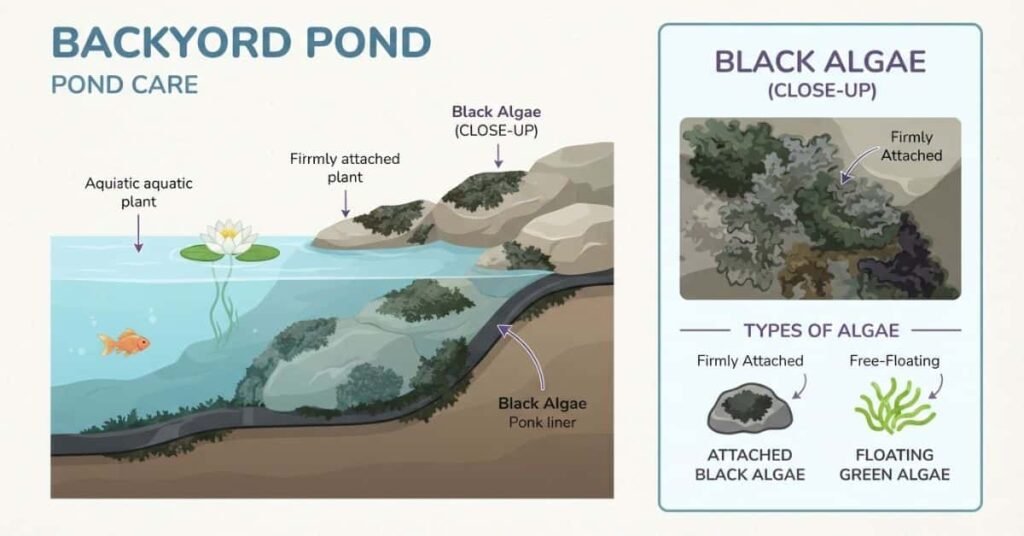
Black algae in a pond refers to dark-colored algae growth that appears on rocks, pond liners, concrete, and other surfaces. It may look black, dark green, brown, or gray, depending on the growth stage and lighting. The term “black algae” can describe several types of dark algae, so correct identification matters before choosing a treatment.
It often forms tough patches, short tufts, or crusty growth that stays firmly attached to surfaces. Unlike floating green algae, it doesn’t always spread evenly through the water. This makes it harder to remove with a simple pond skimmer or water change.
Black algae can become difficult to remove because its growth attaches strongly to rough surfaces. Brushing can loosen it, but some growth may remain behind and return when pond conditions favor algae growth.
Green algae usually appears as floating particles, suspended green water, or soft growth on surfaces. Black algae tends to look darker and more firmly attached. Pro Tip: Take a close photo before treating unusual growth. Identification helps you choose the right removal method and avoid unnecessary chemicals.
What Causes Black Algae in Ponds?
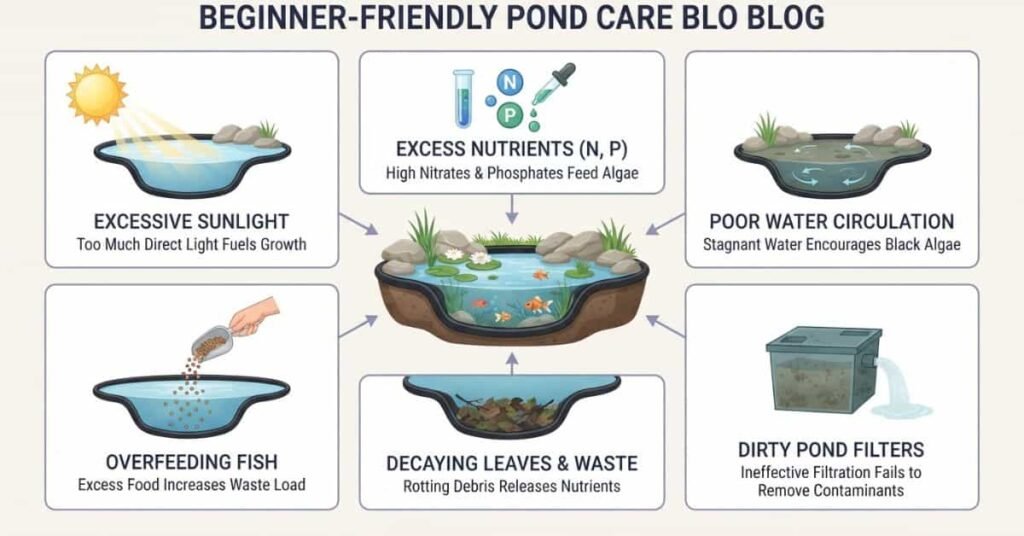
Understanding what causes black algae in ponds helps you treat the problem instead of repeatedly removing the symptoms. Algae grows when environmental conditions provide enough light, nutrients, and suitable surfaces.
Pond algae can develop for several reasons, including excess nutrients, sunlight, and poor water circulation. If you want to understand the root causes first, see our guide on what causes algae in ponds.
Several pond conditions can encourage persistent algae growth. These include excessive sunlight, nutrient buildup, poor circulation, and organic waste.
Too Much Sunlight
Sunlight provides energy that algae needs to grow. A pond exposed to strong sunlight for much of the day can develop algae more easily.
This becomes more noticeable when the pond also contains excess nutrients. Warm, well-lit water can create favorable conditions for algae growth.
You don’t need to eliminate sunlight completely. Instead, consider adding floating plants or partial shade where practical.
A shade cloth can also reduce direct sunlight without covering the entire pond. Keep enough open surface area for proper gas exchange and healthy plant growth.
Expert Tip: Watch which areas receive the most direct afternoon sun. Persistent algae often appears first in those bright, warm locations.
Excess Nutrients (Nitrates & Phosphates)
Nutrients such as nitrates and phosphates can support algae growth. These nutrients enter ponds through fish waste, uneaten food, decaying plants, and runoff.
A pond may develop recurring algae when nutrient levels remain elevated. Removing visible algae alone won’t address the nutrient source.
Test your pond water regularly when algae keeps returning. Also remove debris and avoid adding more food than your fish can consume quickly.
Partial water changes can help manage nutrient buildup when used appropriately. Your water source may also contribute nutrients, so testing can provide useful information.
Poor Water Circulation
Poor circulation creates areas where water movement remains weak. These stagnant spots can collect debris and nutrients that support algae growth.
A properly sized pond pump helps move water through the filtration system. Waterfalls, returns, and circulation outlets can also improve movement around the pond.
Check areas behind rocks, along pond edges, and near corners. These locations often receive less water movement than the main pond area.
Improving circulation can also help distribute oxygen and prevent debris from settling in certain areas. However, circulation alone won’t remove established algae.
Expert Tip: Look for dead spots where leaves and debris repeatedly collect. Improving flow in these areas can support better long-term pond maintenance.
Overfeeding Fish
Overfeeding adds unnecessary nutrients to pond water. Uneaten food breaks down and contributes organic material that can support algae growth.
Fish also produce waste after eating. Feeding the correct amount helps reduce this nutrient load and keeps the pond cleaner.
Give fish only what they can reasonably consume during feeding. Remove obvious leftover food instead of allowing it to settle.
This matters even more in koi ponds because larger fish can produce substantial waste. Good feeding habits support both water quality and algae control.
Pro Tip: If food remains after feeding, reduce the next feeding slightly. Your pond shouldn’t depend on algae treatment to compensate for excess food.
Decaying Leaves & Organic Waste
Leaves, dead plants, and other organic waste can accumulate on the pond bottom. As this material breaks down, it releases nutrients into the water.
These nutrients can encourage algae growth, especially when combined with sunlight and poor circulation. Organic debris can also make filters work harder.
Use a pond net to remove leaves before they sink. Skim floating debris regularly and trim dying plant material when needed.
A pond vacuum can help remove settled debris from suitable pond surfaces. Avoid disturbing fish or beneficial pond areas unnecessarily during cleaning.
Expert Tip: Autumn leaf buildup deserves extra attention. Removing leaves before they decompose can reduce future nutrient problems.
Dirty Pond Filters
A dirty filter can reduce effective water flow and allow debris to accumulate. Mechanical filter media needs regular cleaning to maintain proper circulation.
However, don’t treat every filter like a sterile container. Biological filter media houses beneficial bacteria that support the pond’s nitrogen cycle.
Follow the manufacturer’s cleaning instructions for your specific filtration system. Avoid aggressively cleaning biological media with chlorinated tap water unless the manufacturer specifically recommends it.
Check for clogged screens, blocked media, and reduced pump flow. These problems can reduce filtration performance and create conditions that favor recurring algae.
Is Black Algae Harmful to Fish and Plants?
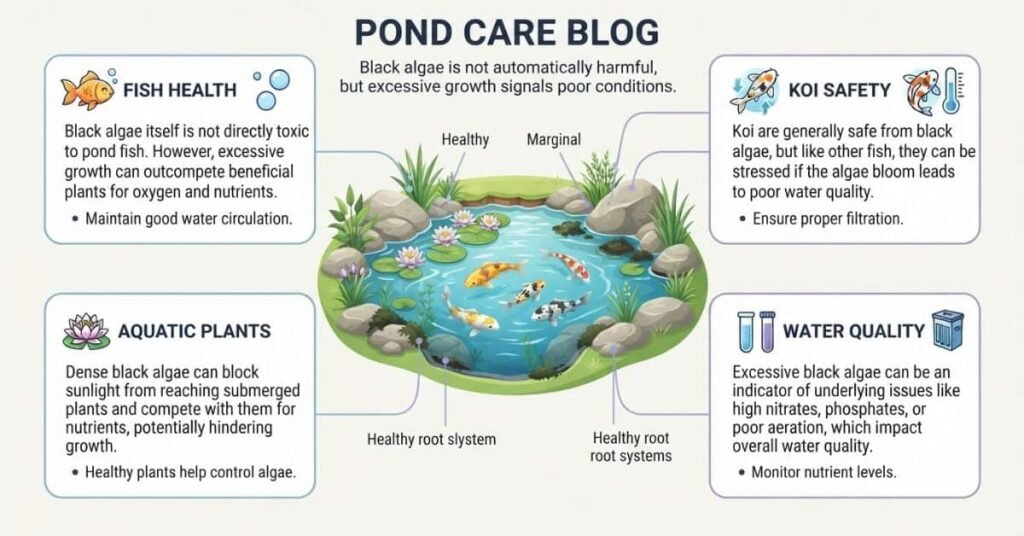
Black algae isn’t automatically dangerous to fish, koi, or pond plants. The bigger concern comes from excessive growth and the conditions that allow it to spread.
Heavy algae growth can compete with plants for light and nutrients. Large amounts of algae can also affect oxygen levels when algae dies and decomposes. Poor water quality may then create additional stress for pond life.
While some algae can be a normal part of a healthy pond, excessive growth can create problems for water quality and pond life. Learn more about whether pond algae is harmful or beneficial before choosing a treatment.
Fish
Most attached algae isn’t harmful simply because it looks black. However, excessive growth can indicate underlying water-quality problems.
Monitor fish for unusual behavior, especially if algae suddenly increases. Check water parameters when fish appear stressed or the pond develops strong odors.
Koi
Koi can live around normal pond algae without problems. However, recurring algae may signal excess nutrients, poor filtration, or inadequate circulation.
Avoid treating a koi pond with an algaecide unless the product specifically states that it’s safe for koi and your pond plants. Always follow the label directions.
Plants
Algae can compete with aquatic plants for available nutrients and light. Thick growth may also cover plant surfaces and reduce their ability to grow normally.
Removing algae manually can help protect plants without introducing unnecessary chemicals.
Water Quality
Water quality often matters more than the algae’s color. Test appropriate parameters when algae becomes persistent or fish show signs of stress.
Focus on filtration, circulation, aeration, debris removal, and nutrient control. These steps address the conditions that allow algae to thrive.
How to Get Rid of Black Algae in a Pond
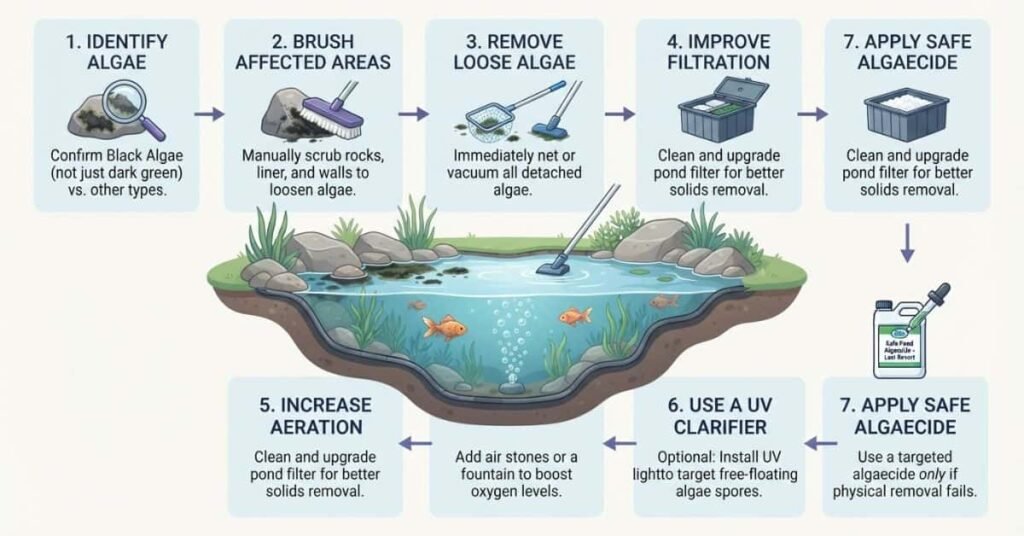
If you’re wondering how to get rid of black algae in pond, start with physical removal and better pond management. Chemical treatment shouldn’t be your first step.
Established algae can cling tightly to rocks, liners, and other surfaces. Removing the growth manually reduces the visible problem while filtration and circulation address the conditions supporting it.
Chemical treatments are not always necessary when dealing with common pond algae problems. You can also explore how to get rid of pond algae naturally with fish-safe and chemical-free methods.
Step 1: Identify the Algae Correctly
Before treating the pond, inspect the growth closely. Black-looking growth isn’t always the same type of algae.
Check its color, texture, location, and how firmly it attaches to surfaces. Take a clear photo if you’re unsure about identification.
This step matters because different algae problems respond to different treatments. Don’t choose an algaecide based only on color.
Step 2: Brush Affected Rocks and Liner
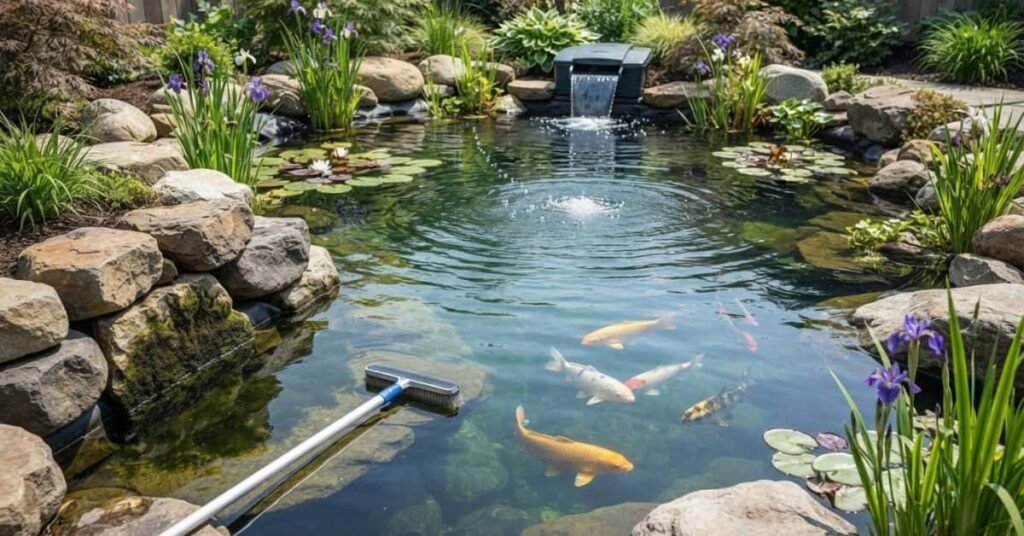
Use a suitable pond brush to loosen algae from rocks, liner surfaces, and other accessible areas. Work gradually instead of disturbing the entire pond at once.
A stiff brush can help remove stubborn growth from hard surfaces. Use extra care with flexible liners to avoid damage.
Wear gloves if needed, especially when handling rough rocks or dirty pond surfaces.
Step 3: Remove Loose Algae
After brushing, remove the loosened material from the pond. A pond net, skimmer, or suitable pond vacuum can help collect debris.
Don’t leave large amounts of dead algae floating or settling on the bottom. Decomposing organic material can add nutrients back into the water.
Remove the waste from the pond rather than simply pushing it into another area.
Step 4: Improve Filtration
Check your pond filter for clogs, blocked screens, and reduced water flow. Clean mechanical filter media according to the manufacturer’s instructions.
Make sure the pump moves enough water through the filtration system. Poor flow can allow debris and nutrients to accumulate.
Protect beneficial bacteria when cleaning biological media. Avoid unnecessarily sterilizing established biological filter material.
Step 5: Increase Aeration
Good aeration supports oxygen levels and healthy biological activity. An air pump, diffuser, or properly designed waterfall can improve gas exchange.
Aeration becomes especially important during warm weather or algae treatment. Large amounts of dying algae can increase oxygen demand as they decompose.
Keep aeration running consistently when your pond system allows it.
Step 6: Use a UV Clarifier if Needed
A UV clarifier can help control free-floating algae that causes green or cloudy pond water. It doesn’t directly remove established algae attached to rocks or liners.
Make sure the UV unit matches your pond system and follows the manufacturer’s flow recommendations.
Think of UV as a water-clarity tool, not a complete solution for attached black algae.
Step 7: Apply a Safe Algaecide as a Last Resort
Use an algaecide only when physical removal and pond management aren’t enough. Choose a product specifically labeled for your pond type and livestock.
Follow the product label carefully. Never exceed the recommended dose.
Extra caution matters in koi ponds and heavily planted ponds. Rapid algae die-off can affect oxygen levels and water quality.
Maintain strong aeration during treatment when the product label recommends it. Remove dying algae when practical to reduce decomposition.
How to Get Rid of Black Algae in a Koi Pond
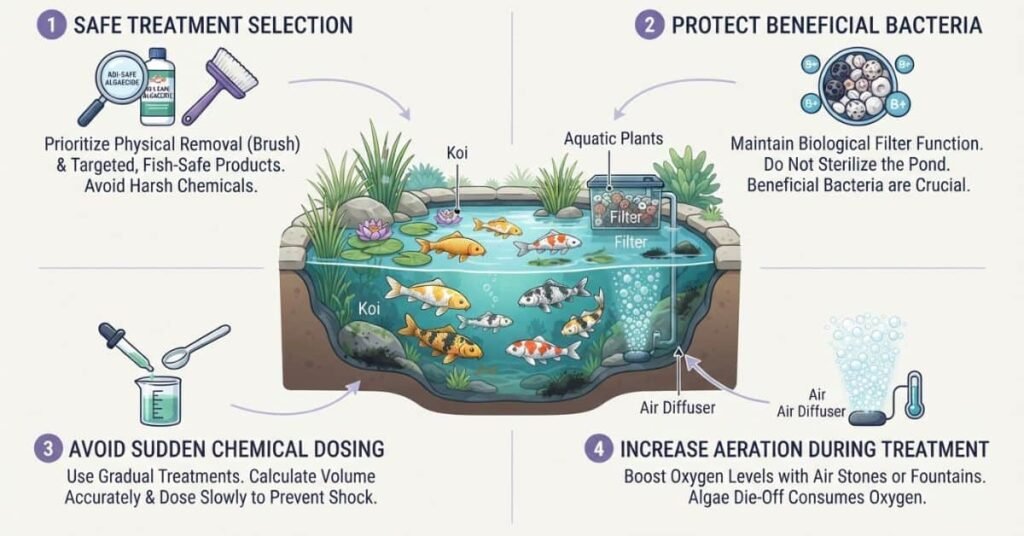
Knowing how to get rid of black algae in a koi pond requires extra care because koi depend on stable water conditions. Start with physical removal instead of immediately adding chemicals.
Brush algae from suitable rocks and surfaces, then remove the loosened material with a net or pond vacuum. Check your filter and pump afterward to ensure proper water movement.
For chemical treatments, choose products specifically labeled as safe for koi ponds. Follow the product label exactly and never increase the dose because algae looks stubborn.
Protect Beneficial Bacteria
Beneficial bacteria support biological filtration and help process fish waste. Harsh treatments or unnecessary filter cleaning can disrupt this helpful community.
Clean mechanical filter media regularly, but handle biological media according to the manufacturer’s instructions. Avoid using untreated chlorinated water on established biological media.
Avoid Sudden Chemical Dosing
Never pour an excessive amount of algaecide into a koi pond. Rapid algae die-off can increase organic decomposition and place additional pressure on available oxygen.
Measure the pond volume as accurately as possible before using any treatment. Follow the product label for dosing, water conditions, and fish-safety instructions.
Add Extra Aeration During Treatment
Strong aeration helps support oxygen exchange during algae treatment. This becomes particularly important when significant algae growth begins dying.
Use an air pump, diffuser, or other suitable aeration system. Continue aeration according to the treatment manufacturer’s instructions.
Natural Ways to Remove Black Algae
Natural methods can help reduce black algae without relying on repeated chemical treatments. However, they work best when you also address sunlight, nutrients, circulation, and organic waste.
Barley Straw
Barley straw is often used as a natural pond-management method. As it breaks down, it may release compounds that can discourage certain algae growth.
However, barley straw isn’t a guaranteed treatment for established black algae. Don’t expect it to quickly remove thick growth attached to rocks or liners.
Use it as a supporting or preventive method rather than your main removal strategy.
Beneficial Bacteria
Beneficial bacteria can help break down organic waste and support biological filtration. This may reduce nutrient sources that encourage recurring algae.
Choose a pond-specific bacterial product and follow its application instructions. Bacteria work best as part of an overall maintenance routine.
They shouldn’t be treated as a direct replacement for physically removing established algae.
Floating Plants
Floating plants can provide shade and compete with algae for available nutrients. They can help reduce the amount of direct sunlight reaching the water.
Don’t cover the entire pond surface. Fish and beneficial organisms still need adequate gas exchange and healthy water conditions.
Remove excess plant growth regularly to prevent additional organic waste.
Water Changes
Appropriate partial water changes can help reduce accumulated nutrients and improve overall water quality. Avoid replacing large amounts of water unnecessarily.
Test your source water when possible. Tap or well water can contain minerals or nutrients that influence pond conditions.
Always consider fish safety when changing water temperature or chemistry.
Reduce Feeding
Reducing unnecessary feeding can lower the amount of organic waste entering the pond. Feed koi appropriate portions and remove obvious leftovers.
Fish don’t need excessive food simply because they appear eager during feeding time.
Better feeding habits can support cleaner water and reduce nutrient buildup over time.
Shade Cloth
A properly positioned shade cloth can reduce direct sunlight without changing the pond’s chemistry. This can help limit conditions that favor algae growth.
Use partial shade rather than completely covering the pond. Position the cloth where it blocks the strongest sunlight while maintaining healthy pond conditions.
Best Products for Black Algae Removal
The best product depends on where the algae grows and what’s causing it to return. No single product works equally well for every pond.
For attached black algae, start with physical removal and better pond management. Products such as pond vacuums can remove algae directly, while filtration and aeration help improve overall conditions.
| Product | Best For | Main Benefit | Important Consideration |
|---|---|---|---|
| Algaecide | Persistent established algae | Can provide faster algae control | Choose a fish-safe product and follow the label |
| Beneficial bacteria | Nutrient and organic waste control | Supports biological filtration | Works gradually rather than instantly |
| Pond vacuum | Loose algae and debris | Removes material from the pond | Requires regular hands-on cleaning |
| UV clarifier | Green or cloudy water | Controls suspended algae | Doesn’t directly remove attached black algae |
| Pond pump upgrade | Poor circulation | Improves water movement and filtration | Pump must match pond requirements |
Choosing the Right Product
A pond vacuum is useful when you want to physically remove algae and settled debris. It can reduce the organic material that feeds future algae growth.
Beneficial bacteria can support biological filtration and help manage organic waste. They’re best used alongside proper filtration and regular maintenance.
A UV clarifier makes more sense when suspended algae causes green water. It won’t solve thick algae attached to rocks, liner, or concrete.
An algaecide can help with persistent growth when other methods aren’t enough. Always check the label for koi, fish, plants, and pond-specific safety.
A pond pump upgrade may be worthwhile when poor circulation contributes to recurring algae. Choose the pump based on actual flow requirements, head height, and filtration needs.
How to Prevent Black Algae from Coming Back
Removing black algae is only half the job. Prevention starts with creating pond conditions that make recurring growth less likely.
Proper Filtration
Your filtration system should remove debris and support biological processing. Check mechanical media regularly for clogging and reduced water flow.
Keep biological media established and follow the manufacturer’s cleaning instructions. A neglected filter can reduce circulation and allow organic waste to accumulate.
Correct Pond Pump Size
Your pump should provide enough flow for your pond and filtration system. Undersized or poorly selected pumps can create weak circulation and stagnant areas.
Consider head height, pipe length, fittings, and filter restrictions when evaluating pump performance. The pump’s advertised flow rate doesn’t always equal its actual operating flow.
Regular Maintenance
Remove leaves, dead plant material, and other debris before they decompose. Clean mechanical filter media before heavy buildup restricts water flow.
Brush or vacuum algae when small patches appear. Early removal usually requires less effort than dealing with thick, established growth.
Water Testing
Regular water testing can help identify problems before algae becomes severe. Test the parameters recommended for your pond type and livestock.
Pay particular attention to measurements related to the nitrogen cycle and overall water quality. Record results so you can notice changes over time.
If test results seem unusual, investigate the cause before adding treatment products.
Nutrient Control
Control the nutrients that enter your pond through fish food, waste, leaves, plant debris, and runoff. Avoid feeding koi more than they need.
Remove settled organic waste and maintain effective filtration. Floating plants can also help use available nutrients when managed properly.
Black Algae vs Green Algae
Black algae and green algae can look similar from a distance, but they behave differently in ponds. Identifying the growth correctly helps you choose a more suitable treatment.
| Feature | Black Algae | Green Algae |
|---|---|---|
| Appearance | Usually appears dark green, gray, brown, or nearly black. It often forms attached patches or tufts. | Often appears bright green, green water, soft mats, or slippery surface growth. |
| Difficulty | Often harder to remove because it can attach firmly to rocks, liners, and other surfaces. | Some forms are easier to remove, especially when they float or remain suspended in the water. |
| Harm | The color itself doesn’t automatically mean it’s toxic. Heavy growth can indicate poor pond conditions. | Usually isn’t harmful simply because it’s green. Excessive growth can still affect water quality and oxygen. |
| Treatment | Start with brushing, physical removal, filtration, circulation, and nutrient control. | Treatment depends on the type. UV clarifiers can help with suspended green algae. |
| Best Prevention | Reduce nutrients, improve circulation, maintain filtration, and remove organic waste. | Manage sunlight, nutrients, filtration, and water movement. |
One important distinction is how the algae grows. Attached growth usually needs physical removal, while suspended algae may respond to filtration or UV clarification.
Don’t assume a UV clarifier will solve every algae problem. UV systems mainly target algae suspended in the water, not algae firmly attached to pond surfaces.
Common Mistakes
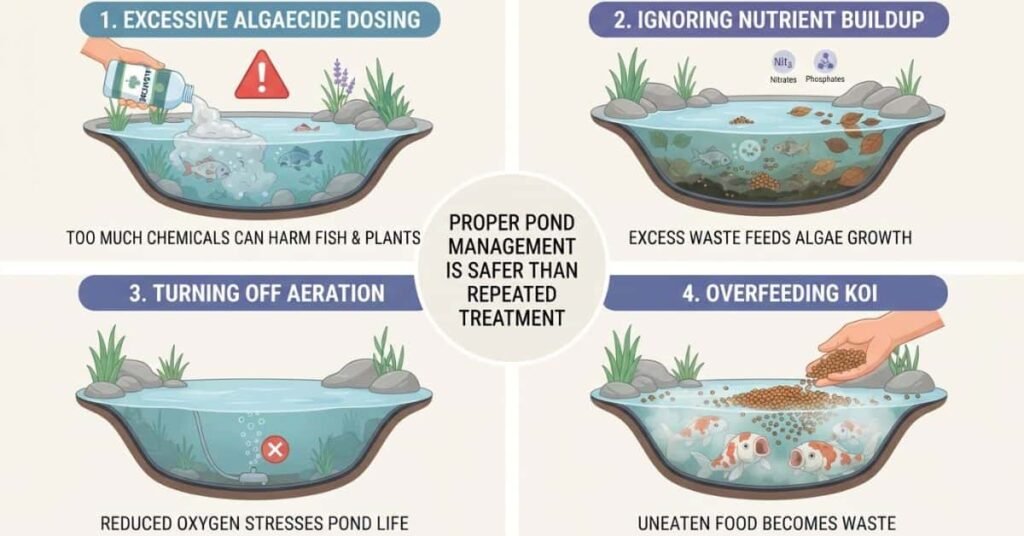
Treating black algae seems simple, but several common mistakes can make the problem worse. Avoiding them can protect fish and improve long-term pond health.
Adding Too Much Algaecide
Using more algaecide doesn’t necessarily produce faster results. Excessive dosing can create unnecessary risks for fish, plants, and water quality.
Always measure the pond volume carefully and follow the product label. Never exceed the recommended dose.
Large amounts of dying algae can also increase oxygen demand as organic material decomposes. Maintain appropriate aeration when the product instructions recommend it.
Ignoring Nutrient Buildup
Removing algae without addressing nutrients often leads to recurring growth. Fish waste, uneaten food, leaves, and decomposing plants can all add nutrients.
Clean debris regularly and avoid overfeeding fish. Good filtration also helps manage organic waste.
Turning Off Aeration
Some pond owners turn off aeration during treatment because they worry about disturbing the process. This can be a poor choice when algae is dying rapidly.
Dying algae can increase oxygen demand during decomposition. Adequate aeration supports oxygen exchange and helps protect pond life.
Always follow the treatment manufacturer’s specific instructions regarding aeration.
Overfeeding Koi
Overfeeding adds unnecessary nutrients to the pond. Uneaten food breaks down and contributes additional organic waste.
Feed appropriate portions and remove obvious leftovers. Consistent feeding habits can make nutrient control much easier.
Conclusion
Black algae usually thrives when ponds have excess nutrients, strong sunlight, poor circulation, or organic waste. Physical removal works best when combined with better filtration, aeration, and regular maintenance.
If you’re learning how to get rid of black algae in pond, focus on prevention instead of repeated chemical treatments. Remove algae early, control fish feeding, clear debris, and keep your filtration system working properly. These habits can also help prevent recurring algae problems.
For related pond-care guidance, explore our resources on green algae in ponds, string algae removal, and the Pond Pump Size Calculator. You can also learn more about best pond filters and beneficial bacteria for ponds.
Before treating any algae problem, it helps to understand the different types and how they grow. Our complete guide to pond algae types, causes, and control can help you identify the problem.
Have you dealt with black algae in your pond? Share what worked for you, or explore more pond-care guides on our website.
Frequently Asked Questions
Black algae can develop when ponds have favorable conditions for algae growth. Common causes include excessive sunlight, nutrient buildup, poor water circulation, overfeeding fish, and decaying leaves. Dirty filters can also contribute by reducing water flow and allowing organic waste to accumulate. To prevent recurring growth, focus on filtration, circulation, debris removal, proper feeding, and nutrient control.
Black algae isn’t automatically harmful to koi simply because it looks black. However, heavy algae growth can signal underlying water-quality problems. When large amounts of algae die and decompose, oxygen levels can become a concern. Keep your koi pond well-aerated and maintain good filtration. Avoid using an algaecide unless the product specifically states that it’s safe for koi and your pond conditions.
Established black algae usually shouldn’t be expected to disappear on its own. Attached growth can remain firmly stuck to rocks, liners, and other surfaces. Improving water quality may slow new growth, but existing patches often need physical removal. Brush affected surfaces, remove the loosened algae, and address nutrients, circulation, sunlight, and filtration to reduce the chance of regrowth.
Natural pond management methods can help control black algae without relying on repeated chemical treatments. Physical brushing and removal provide the most direct approach. Beneficial bacteria can help manage organic waste and nutrient buildup. Barley straw may support algae control but isn’t a guaranteed treatment for established black algae. Floating plants and shade cloth can also reduce sunlight when used properly.
Draining the pond is usually not the first solution for black algae. It can stress fish, disturb beneficial biological filtration, and create unnecessary work. Start with physical removal, filtration improvements, better circulation, aeration, and nutrient control. Consider major pond cleaning only when the pond has serious debris buildup or another maintenance problem that requires it.
A UV clarifier can help control free-floating algae that causes green or cloudy pond water. However, it doesn’t directly remove established black algae attached to rocks, liners, or concrete. UV works by treating water that passes through the unit. For attached black algae, focus on brushing, physical removal, filtration, circulation, and nutrient control.
Beneficial bacteria generally shouldn’t be viewed as a direct black algae killer. They can support biological filtration and help break down organic waste that contributes to nutrient buildup. This may make pond conditions less favorable for recurring algae. For established black algae, combine beneficial bacteria with physical removal, proper filtration, controlled feeding, and regular pond maintenance.
Start by brushing and removing the algae from suitable pond surfaces. Then check filtration, circulation, aeration, and nutrient levels. Avoid sudden or excessive chemical dosing. If an algaecide becomes necessary, choose one specifically labeled for koi ponds and follow its instructions exactly. Maintain adequate aeration during treatment when recommended by the product label.
The timeline depends on how much algae is present and whether you correct the underlying causes. Small patches may improve quickly after thorough physical removal. Heavy growth can require repeated cleaning and ongoing maintenance. If nutrients, sunlight, or poor circulation remain unchanged, the algae may return. Focus on both removal and prevention for lasting results.
Yes, properly managed pond plants can help by using available nutrients and providing some shade. Floating plants can reduce direct sunlight reaching the water surface. However, don’t cover the entire pond with plants. Excess plant growth can create additional organic waste when leaves and stems die. Keep plants healthy and remove dying material regularly.
Preventing recurrence requires consistent pond maintenance. Keep mechanical filtration clean, maintain proper water circulation, remove leaves and organic waste, and avoid overfeeding fish. Test your pond water when algae repeatedly returns. You can also use floating plants or shade cloth to manage strong sunlight. Treating these underlying conditions is more effective than repeatedly relying on algaecides.

Michael Brooks and Sarah Lane are the co-founders of the Pond Pump Team, a trusted U.S.-based group helping homeowners and landscapers build better ponds and water features. Michael, an experienced pond engineer from Oregon, has worked for over 12 years on pump sizing, flow systems, and water circulation. Sarah, a pond designer from Colorado with nine years of experience, focuses on eco-friendly and easy-to-maintain pond and waterfall designs. Together, they’ve completed more than 180 pond projects and created tools like the Pond Pump Calculator and Pond Liner Calculator to make pond planning simple, accurate, and sustainable.
Need help with your pond setup? Contact the Pond Pump Team for expert advice and reliable solutions.