Table of Contents
Introduction
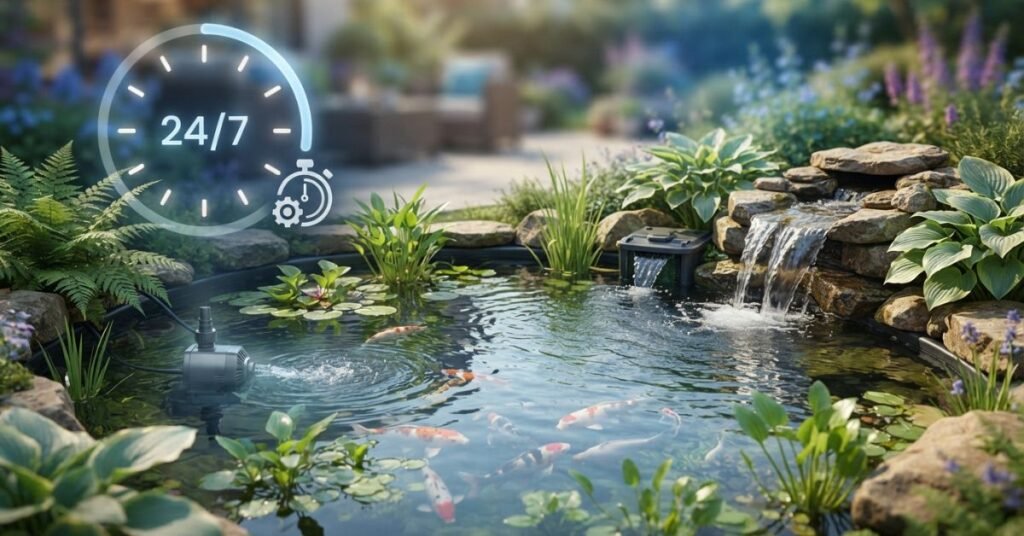
Should your pond pump run 24 hours a day, or is it better to switch it off at night?
Many new pond owners wonder, should a pond pump be on all the time? The answer isn’t always as simple as running it day and night. Your pump may power filtration, circulate water, or run a waterfall. Each setup can have different needs.
Good water movement helps prevent stagnant areas and keeps your pond system working properly. It can also support filtration and improve surface water movement. However, running a pump continuously isn’t automatically necessary for every pond.
In this guide, you’ll learn how long a pond pump should run each day. We’ll explain when 24/7 operation makes sense and when a timer may work better. You’ll also learn what changes for fish ponds, waterfalls, winter, and hot weather.
By the end, you’ll have a simple way to choose the right pump schedule for your pond. More importantly, you’ll know when switching your pump off could create problems.
Should a Pond Pump Run All the Time?
For many ponds, regular water circulation helps keep the pond healthy and the equipment working properly. So, should a pond pump run all the time? Often, yes, especially when the pump powers filtration or supports a fish pond.
Continuous operation keeps water moving through filters and reduces stagnant areas. Fish and koi ponds often benefit from steady circulation because water quality and oxygen levels can change quickly. However, running every pump 24/7 isn’t always necessary.
Your ideal schedule depends on several factors, including pump type, pond design, filtration, waterfall use, fish load, and climate. A decorative fountain may work well on a timer, while a pump feeding biological filtration often needs longer operation.
| Pond Setup | Recommended Approach |
|---|---|
| Fish or koi pond | Usually continuous |
| Pond with biological filter | Usually continuous |
| Pond with waterfall | Continuous or scheduled |
| Decorative pond | Depends on circulation needs |
| Small pond | Depends on temperature and equipment |
| Pond with separate aerator | More flexible |
| Extreme weather | Adjust the schedule as needed |
Why Keep a Pond Pump Running Continuously?
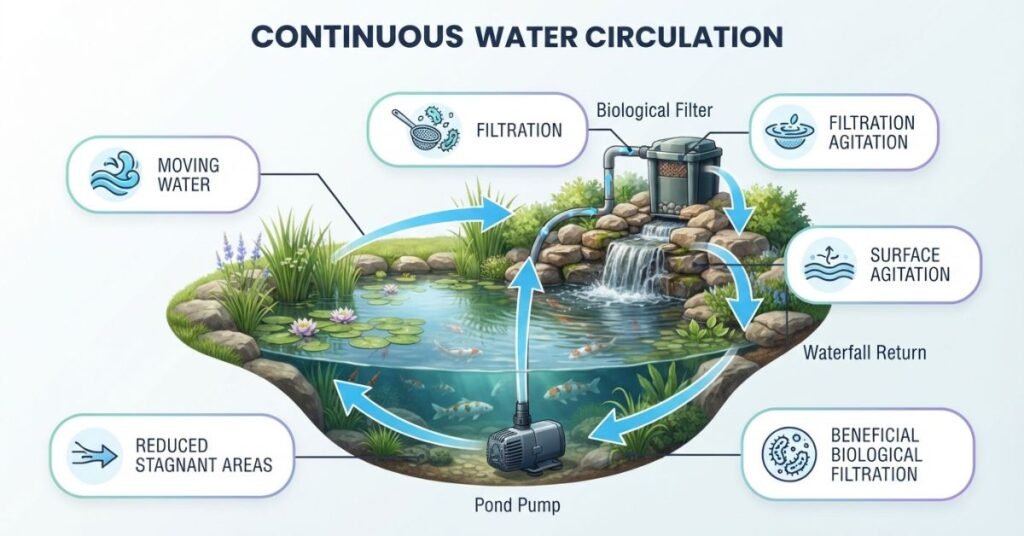
A continuously running pond pump can provide several benefits beyond simply moving water. It helps maintain circulation, supports filtration, and keeps water flowing through important pond equipment.
These benefits matter most when your pump connects directly to a filter or waterfall. Fish ponds may also benefit from steady circulation, especially during warmer weather. However, a pump doesn’t replace dedicated aeration when your pond needs more oxygen.
1 Keeps Water Moving
Water movement helps prevent stagnant areas from developing around the pond. Stagnant zones can collect debris and reduce overall circulation.
A properly sized pump keeps water moving between different areas of the pond. This can also help distribute temperature and dissolved substances more evenly.
2 Supports Filtration
If your pump supplies a mechanical or biological filter, switching it off stops water from flowing through that filter. This means the filtration system isn’t actively processing pond water during that period.
Continuous flow can keep the filtration system working as designed. Always check the filter manufacturer’s instructions before changing the recommended operating schedule.
3 Helps Maintain Oxygen Levels
Moving water can increase surface agitation and support gas exchange between water and air. Waterfalls, fountains, and return outlets can create additional surface movement.
However, not every pond pump provides enough oxygenation by itself. Fish stocking, water temperature, pond depth, and aeration equipment all affect oxygen levels.
4 Helps Prevent Stagnant Water
Larger or deeper ponds can develop areas with limited circulation. These zones may occur behind plants, around corners, or near the bottom.
Good circulation helps reduce these low-flow areas. Pump placement and pond design still matter, so simply using a larger pump isn’t always the best solution.
3.5 Supports Beneficial Bacteria
Biological filters rely on beneficial bacteria to process fish waste and other organic compounds. When your pump feeds this type of filter, steady water flow helps keep the filtration process running.
Pro Tip: Treat your pump and biological filter as one system. If the filter depends on constant flow, avoid using a timer without checking the manufacturer’s recommendations.
Should I Leave My Pond Pump on All the Time?
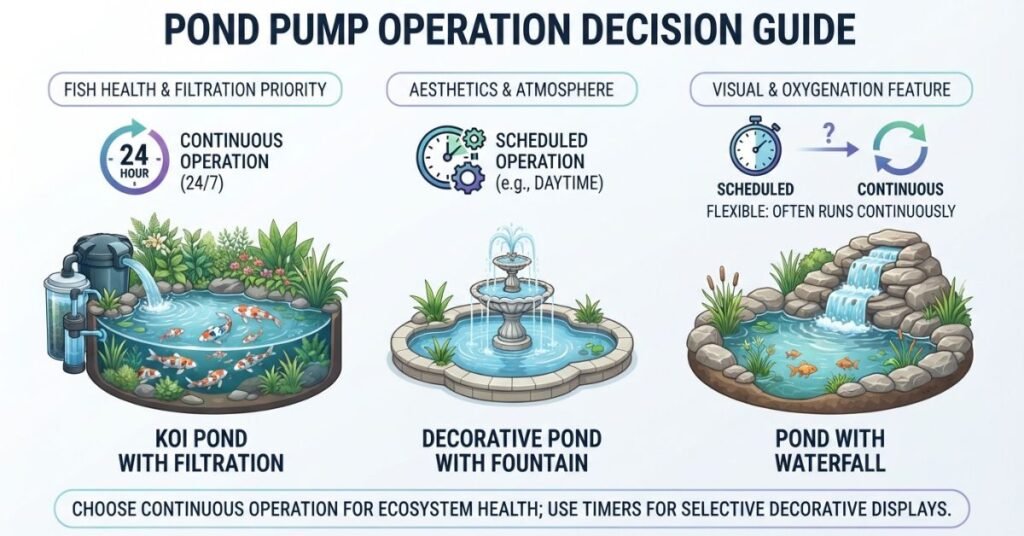
If you’re wondering, should I leave my pond pump on all the time, the answer depends on what the pump does. Many fish ponds benefit from continuous circulation, especially when the pump runs filtration or a waterfall.
Fish and koi ponds often benefit from steady water movement. The same applies to ponds with biological filters, where the pump keeps water flowing through the filter. A waterfall can also provide useful circulation when it runs regularly. High fish loads may increase the need for consistent circulation, particularly during warm weather.
However, continuous operation isn’t required for every pond. A decorative pond may use a timer if the pump doesn’t power essential filtration. Some systems also have separate aeration, which provides more scheduling flexibility. Your pump’s design, pond size, filtration system, and manufacturer’s instructions should guide the final schedule.
Pro Tip
Don’t choose a runtime based on the pump alone. First, identify whether it powers filtration, aeration, circulation, or only a decorative feature.
Should You Turn a Pond Pump Off at Night?
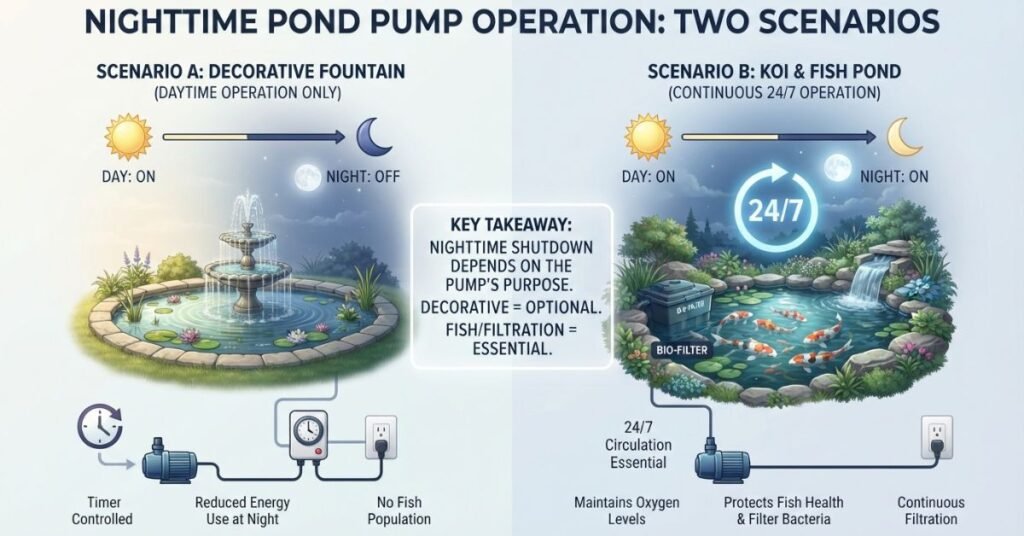
Many pond owners consider switching their pump off at night to save electricity. However, nighttime isn’t automatically the best time to stop circulation.
Turning the pump off may be reasonable for a decorative water feature that doesn’t support essential filtration. It may also work when the pond has independent aeration and the pump only runs a display feature. If the manufacturer recommends scheduled operation, follow those instructions.
However, switching off the pump can create problems in some ponds. Fish and koi ponds often benefit from consistent circulation. The same applies when the pump drives biological filtration or provides important water movement.
Hot weather also deserves extra attention. Warmer water can hold less dissolved oxygen, while fish may have higher oxygen demands. High fish stocking can increase these concerns further.
The key point is simple: nighttime isn’t automatically the right time to turn off a pond pump. Look at what the pump does before changing its schedule.
Can a Pond Pump Be Placed on a Timer?
Yes, many pond pumps can be placed on a timer for scheduled operation. A timer can help control operating hours and reduce unnecessary runtime for certain decorative water features.
However, whether you should use a timer depends on what the pump actually does. A decorative fountain may work well with scheduled daytime operation. But a pump feeding biological filtration may need continuous flow to keep the filtration system working properly.
Before adding a timer, identify every component connected to the pump. Check the pump and filter manufacturer’s instructions as well. Some equipment may have specific operating requirements that make frequent shutdowns unsuitable.
Timer Setup Examples
| Pond Setup | Typical Approach |
|---|---|
| Decorative pond | Scheduled daytime operation |
| Waterfall | Several scheduled periods or continuous operation |
| Fish pond with filtration | Usually continuous |
A timer gives you more control, but it shouldn’t override essential circulation needs.
Can Pond Pumps With Waterfalls Run on a Timer?
Yes, pond pumps with waterfalls can run on a timer, but the right schedule depends on the waterfall’s role. If it only creates a decorative effect, scheduled operation may work well.
However, turning off the waterfall pump also stops the water movement it creates. This can reduce circulation when the waterfall serves an important role in the pond system. The impact matters more in ponds with fish, high stocking levels, or limited circulation.
If the waterfall pump also feeds biological filtration, long shutdown periods may interrupt water flow through the filter. A separate aerator can provide additional oxygenation, but it doesn’t replace the circulation provided by the pump.
Consider these factors before using a timer:
- Fish load: More fish can increase circulation and oxygen needs.
- Filtration: Essential filters may need continuous water flow.
- Aeration: Independent aeration provides more flexibility.
- Waterfall purpose: Decorative waterfalls have different needs.
How Long Should a Pond Pump Run Each Day?
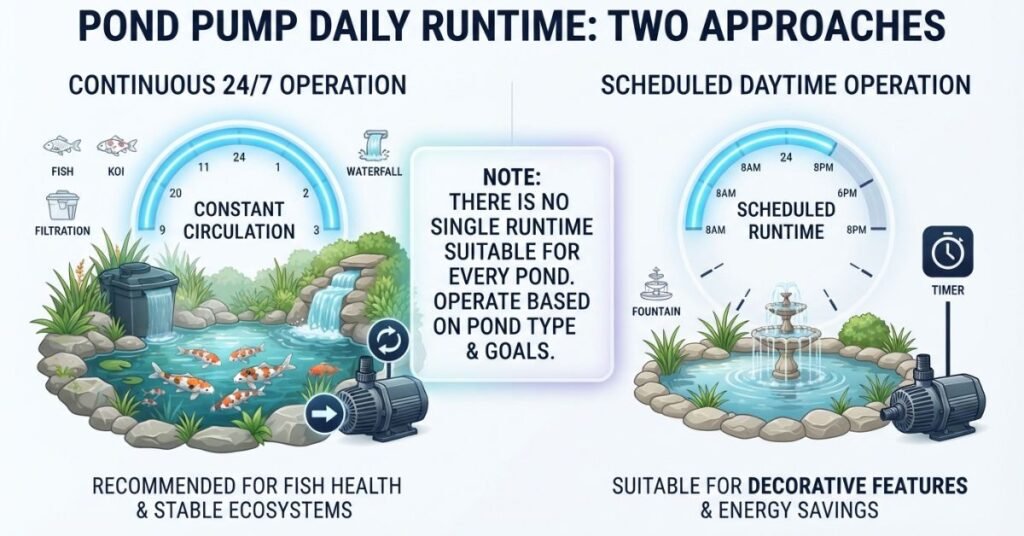
There isn’t one universal number of hours that works for every pond. The ideal runtime depends on your pond’s purpose, filtration system, fish load, pump design, and climate.
For many fish ponds and koi ponds, running the pump continuously is often the simplest approach. This keeps water moving and allows connected filtration systems to operate consistently. High-circulation ponds and systems that depend on continuous filtration may also benefit from 24-hour operation.
Scheduled operation can work for some decorative ponds, fountains, and water features. This approach makes more sense when the pump isn’t responsible for essential filtration or circulation.
| Pond Setup | Typical Runtime Approach |
|---|---|
| Fish pond | Often 24 hours |
| Koi pond | Often 24 hours |
| Pond with filtration | Often continuous |
| High-circulation pond | Often continuous |
| Decorative pond | Scheduled operation may work |
| Fountain | Scheduled operation may work |
| Decorative water feature | Depends on system |
Pond Pump Runtime by Pond Type
Different ponds have different circulation needs, so pump runtime can vary widely. A koi pond may need steady circulation, while a decorative pond may only need the pump during certain hours.
The table below gives a practical starting point. Your filtration system, fish load, pump design, climate, and manufacturer’s instructions should guide the final schedule.
| Pond Type | Typical Approach |
|---|---|
| Koi pond | Continuous circulation often preferred |
| Fish pond | Usually long or continuous operation |
| Garden pond | Depends on filtration |
| Decorative pond | Scheduled operation may work |
| Waterfall pond | Depends on whether the waterfall provides essential circulation |
| Small pond | Depends on pump and filtration |
| Wildlife pond | Often different from ornamental ponds |
A koi or fish pond usually benefits from consistent circulation, especially when the pump powers filtration. A garden pond may need a different schedule based on its equipment and stocking level.
Decorative ponds have more flexibility when the pump only operates a fountain or visual feature. Wildlife ponds also differ because they may use natural circulation and have fewer mechanical filtration needs.
Pro Tip
Use this table as a starting point, not a fixed rule. Check your pump, filter, fish load, and pond design before choosing a daily runtime.
Should a Pond Pump Run All the Time in Winter?
Winter changes how your pond behaves, so your summer pump schedule may not work well during colder months. Water temperature, ice formation, fish activity, and pump placement all affect the right approach.
As water gets colder, fish become less active and their oxygen demand generally decreases. However, winter circulation can still matter, especially when the pump supports filtration or helps maintain water movement. Ice can also create equipment concerns, particularly if moving water reaches areas where freezing could damage components.
Pump placement matters too. A pump positioned too close to the surface may behave differently from one placed deeper in the pond. In some setups, moving the pump or changing the circulation method may help protect fish and equipment.
There is no universal rule to always run or always stop a pond pump in winter. Follow your equipment manufacturer’s winter instructions and consider your pond’s depth, fish, filtration, climate, and freezing conditions.
Should You Leave the Pump Running During Hot Weather?
Hot weather can make pond circulation more important. Warmer water holds less dissolved oxygen, while fish may become more active and use more oxygen. High fish loads can make these concerns more significant.
Keeping the pump running can help maintain water movement and surface agitation. This can support gas exchange and reduce stagnant areas. Waterfalls and fountains may provide additional surface movement when the pump operates.
Summer can also encourage algae growth, especially when sunlight and nutrients are plentiful. Good circulation won’t eliminate algae by itself, but it can help maintain better water movement throughout the pond.
Remember that circulation and aeration aren’t the same thing. A pond pump moves water, while an aerator specifically introduces air and supports oxygen exchange. Some ponds benefit from using both systems, particularly when fish stocking is high or temperatures rise.
Pro Tip
During hot weather, monitor fish behavior and water conditions instead of relying only on pump runtime. If fish repeatedly gather near the surface, check your aeration and dissolved oxygen levels.
When Should You Turn a Pond Pump Off?
A pond pump should not run continuously under every condition. Sometimes switching it off protects the pump, pond, or other equipment. The key is knowing when stopping circulation is necessary and when it could create problems.
Turn the Pump Off When:
- Cleaning the pump: Switch it off before removing or inspecting the pump.
- Servicing filters: Stop the pump before cleaning or maintaining connected filtration equipment.
- There is an electrical safety issue: Turn off power if you notice damaged cords, plugs, or electrical components.
- The pump is blocked: Stop it before clearing leaves, debris, or other obstructions.
- The water level is very low: A submerged pump can become exposed and risk running dry.
- Performing maintenance: Follow safe shutdown procedures before working on the pond system.
- The manufacturer requires it: Always follow specific operating and maintenance instructions.
- Extreme weather affects the equipment: Storms, flooding, freezing, or other conditions may require a temporary shutdown.
- Winter equipment requires a different setup: Some pumps may need repositioning, removal, or seasonal protection.
Safety Warning
Never allow a pond pump to run dry. Pumps that require water for cooling or lubrication can become damaged when their water supply stops. If the water level drops below the pump’s safe operating level, switch it off immediately.
Signs Your Pond Needs More Circulation
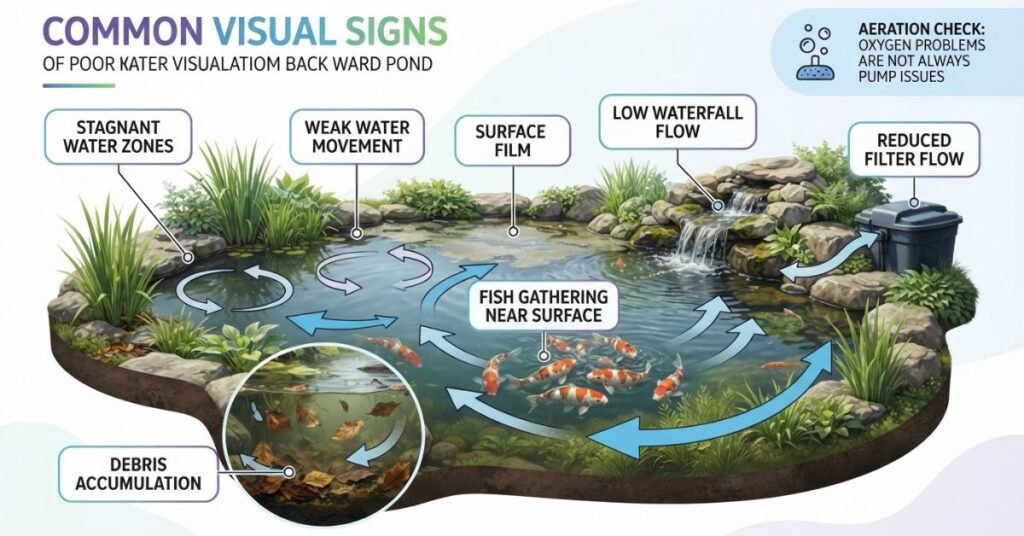
Poor circulation can affect water quality, filtration, and overall pond conditions. You don’t need specialized equipment to notice every warning sign. Start by watching how water moves and how your pond behaves.
Look for these common signs:
- Stagnant areas: Some sections remain almost completely still.
- Poor water movement: Water barely reaches certain parts of the pond.
- Surface film: A persistent film may appear where water movement is weak.
- Low waterfall flow: A noticeable drop in flow can indicate a clogged intake or filtration issue.
- Excessive debris: Leaves and organic material may collect repeatedly in low-flow areas.
- Filter flow problems: Reduced return flow may indicate a blocked intake, dirty filter, or pump issue.
- Fish near the surface: Fish repeatedly gathering near the surface can indicate an oxygen problem.
Fish showing signs of oxygen stress need special attention. Don’t assume increasing pump flow alone will solve the problem. Check dissolved oxygen conditions and consider dedicated aeration when appropriate.
Common Pond Pump Mistakes
Even a good pond pump can cause problems when it’s installed or operated incorrectly. Most mistakes come from focusing only on pump runtime instead of the entire pond system.
Mistake 1: Turning the Pump Off Every Night
Switching off the pump nightly may interrupt filtration and circulation. This matters especially when the pump supplies a biological filter or supports a fish pond.
Mistake 2: Running the Pump With Low Water
A pump needs an adequate water supply to operate safely. Running it at a very low water level can cause overheating or equipment damage.
Mistake 3: Allowing the Intake to Become Clogged
Leaves, algae, and debris can restrict water flow through the intake. Reduced flow can affect filtration and place unnecessary strain on the pump.
Mistake 4: Using an Oversized Pump
A larger pump isn’t automatically better. Excessive flow can overwhelm some filters, increase energy use, or create unsuitable water movement.
Mistake 5: Treating a Pump Like an Aerator
A pond pump primarily moves water. An aerator specifically introduces air and supports oxygen exchange. Some ponds may benefit from both.
Mistake 6: Using a Timer Without Checking Filtration
A timer can interrupt essential water flow when the pump feeds a filter. Always consider the filtration system before creating a schedule.
Pro Tip
Think of your pump, filter, waterfall, and aerator as one system. Changing one component can affect how the others operate.
Quick Decision Guide: Should Your Pump Run 24/7?
Not sure whether your pond pump should run around the clock? Start by identifying what the pump actually does. This quick guide can help you choose a sensible starting point without assuming every pond needs the same schedule.
Pro Tips
Does your pump power your filter?
→ Usually keep it running. Continuous flow may be important for connected biological or mechanical filtration.
Does your pond contain fish or koi?
→ Continuous circulation is often beneficial. Fish ponds generally need reliable water movement and filtration.
Is the pump only running a decorative fountain?
→ A timer may be appropriate. Scheduled operation can work when the pump isn’t supporting essential pond equipment.
Does your pond have separate aeration?
→ You may have more scheduling flexibility. However, aeration doesn’t replace circulation or filtration.
Does the manufacturer recommend a specific schedule?
→ Follow the manufacturer’s instructions. Equipment requirements should take priority over general runtime advice.
The goal isn’t simply to run your pump longer. The right schedule should match your pond’s filtration, fish load, circulation needs, and equipment.
Conclusion
For many fish ponds, koi ponds, and filtered systems, continuous pump operation is often the simplest choice. However, decorative ponds and some water features may work well with scheduled operation.
So, should a pond pump be on all the time? There isn’t one answer for every pond. Your ideal schedule depends on filtration, fish load, pump function, aeration, climate, and pond design.
If you’re unsure, start by identifying everything your pump powers. Then check the manufacturer’s recommendations before using a timer or changing the runtime.
Need help choosing the right pump for your pond? Use our Pond Pump Calculator to find a suitable pump size.
Explore our other pond pump guides for help with sizing, circulation, aeration, and energy use.
Frequently Asked Questions
Not every pond pump needs to run continuously. Fish ponds, koi ponds, and pumps connected to filtration often benefit from continuous operation. Decorative fountains may work with scheduled operation. Consider your pond design, fish load, filtration, and pump function before choosing a schedule.
Often, yes, if your pump powers filtration or supports important circulation. Fish and koi ponds commonly benefit from consistent water movement. However, decorative water features may not need 24/7 operation. Always check your pump and filter manufacturer’s recommendations before changing the schedule.
Running a pond pump continuously can support steady circulation and filtration. This approach often suits fish ponds and biological filtration systems. It isn’t necessary for every decorative pond. The best runtime depends on what the pump actually does.
You can often leave it running when it powers essential filtration or circulation. This is especially useful for many fish and koi ponds. If the pump only runs a decorative feature, a timer may be suitable. Check the complete system before making changes.
Some should, while others don’t need continuous operation. Pumps supporting biological filtration often benefit from steady flow. Decorative pumps may operate on a schedule. Water temperature, fish stocking, filtration, and equipment design all influence the ideal runtime.
Yes, many pond pumps can operate with timers. However, the timer should match the pump’s purpose. A decorative fountain may tolerate scheduled operation. A pump feeding essential filtration may need continuous flow. Always check the manufacturer’s instructions first.
Yes, they can, but the setup matters. A decorative waterfall can often operate on a schedule. If the waterfall pump also powers filtration or essential circulation, long shutdowns may not be suitable. Consider fish load, filtration, aeration, and the pump’s role.
Not necessarily. Turning it off may work for some decorative water features. However, fish ponds and pumps supporting filtration often benefit from continuous operation. Nighttime isn’t automatically the best time to stop circulation. Check what your pump supports before using a timer.
Many fish ponds and filtered systems benefit from 24-hour operation. Decorative ponds and fountains may use shorter scheduled periods. There is no universal runtime for every pond. Follow your equipment manufacturer’s recommendations and consider filtration, fish load, and circulation needs.
Sometimes, but winter requires a pond-specific approach. Water temperature, freezing conditions, pump placement, fish, and filtration all matter. Some systems may need the pump moved or removed. Follow the manufacturer’s winter instructions instead of automatically keeping it on or turning it off.
Fish ponds often benefit from continuous circulation, particularly when the pump powers filtration. Consistent water movement can support filtration and reduce stagnant areas. However, oxygen needs vary with temperature, stocking, and pond conditions. Independent aeration may also be necessary.
A pond pump can support oxygen exchange by moving water and creating surface agitation. However, it doesn’t automatically provide sufficient oxygenation. A dedicated aerator may be needed when oxygen demand is high. Fish behavior, water temperature, stocking levels, and surface movement all matter.

Michael Brooks and Sarah Lane are the co-founders of the Pond Pump Team, a trusted U.S.-based group helping homeowners and landscapers build better ponds and water features. Michael, an experienced pond engineer from Oregon, has worked for over 12 years on pump sizing, flow systems, and water circulation. Sarah, a pond designer from Colorado with nine years of experience, focuses on eco-friendly and easy-to-maintain pond and waterfall designs. Together, they’ve completed more than 180 pond projects and created tools like the Pond Pump Calculator and Pond Liner Calculator to make pond planning simple, accurate, and sustainable.
Need help with your pond setup? Contact the Pond Pump Team for expert advice and reliable solutions.