Table of Contents
Introduction
Have you ever wondered why some ponds stay crystal clear while others struggle with cloudy water and algae, even with regular maintenance? Beneficial bacteria for ponds are one of the most important parts of a healthy pond ecosystem, yet many beginners overlook their role. These naturally occurring microorganisms help break down fish waste, uneaten food, and organic debris while supporting biological filtration. They also help reduce harmful ammonia, control sludge buildup, improve water clarity, and limit the nutrients that encourage algae growth.
Whether you have a small backyard pond or a koi pond, understanding how beneficial pond bacteria work can make routine pond care much easier. The good news is that you do not need to be a water quality expert to use them effectively.
In this guide, you’ll learn what beneficial bacteria are, how they work, when to add them, and how often to use them for the best results. You’ll also discover common mistakes to avoid, answers to frequently asked questions, and practical tips to keep your pond clean, balanced, and healthy throughout the year.
Quick Answer
Beneficial bacteria for ponds are naturally occurring microorganisms that break down fish waste, uneaten food, and organic debris. They also convert harmful ammonia into nitrite and then nitrate through the natural nitrogen cycle. This process improves biological filtration, supports healthy water quality, reduces sludge buildup, and helps keep pond water clearer. While beneficial bacteria do not directly kill algae, they can reduce the excess nutrients that algae need to grow, creating a healthier and more balanced pond ecosystem.
What Are Beneficial Bacteria for Ponds?
Beneficial bacteria for ponds are naturally occurring microorganisms that help keep pond water clean and balanced. They feed on fish waste, uneaten food, dead plant material, and other organic debris that would otherwise pollute the water. These helpful bacteria also play a key role in the pond nitrogen cycle by converting harmful ammonia into less toxic compounds.
Without enough beneficial bacteria, waste quickly builds up. This can lead to poor water quality, cloudy water, sludge accumulation, unpleasant odors, and unhealthy conditions for fish. A strong bacterial colony acts as the foundation of a healthy pond ecosystem, helping maintain stable water conditions with less maintenance.
These bacteria naturally grow on almost any surface that stays underwater. They prefer areas with good water flow and plenty of oxygen, where they can multiply and process waste more efficiently.
If you’re ready to add beneficial bacteria to your pond but aren’t sure which product to choose, read our Best Beneficial Bacteria for Ponds guide. We compared the top-rated options based on bacteria quality, fish safety, ease of use, treatment capacity, and real-world performance to help you find the right product for your pond.
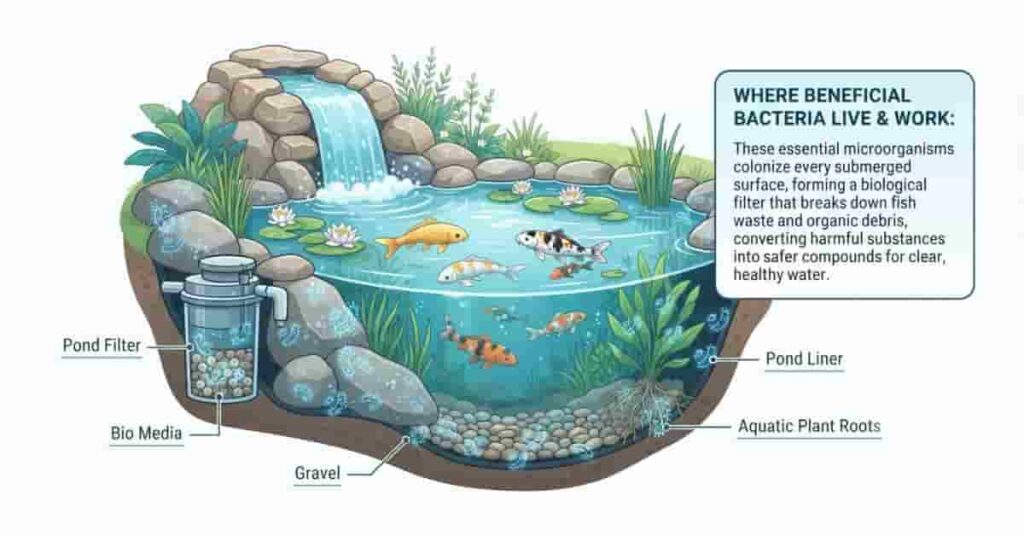
Where Do Beneficial Bacteria Live?
You can find beneficial bacteria throughout a healthy pond, including:
- Pond filters: The primary home for bacteria because water constantly flows through the filter.
- Bio media: Porous materials inside biological filters provide a large surface area for bacterial colonies.
- Rocks and gravel: Natural surfaces where bacteria attach and help break down organic debris.
- Pond liner: A thin bacterial layer develops on the liner over time.
- Plant roots: Aquatic plants provide extra surfaces for bacteria while helping improve water quality.
Pro Tip: Never rinse your biofilter or filter media with chlorinated tap water. Chlorine can kill beneficial bacteria and slow your pond’s natural biological filtration.
How Beneficial Bacteria Work
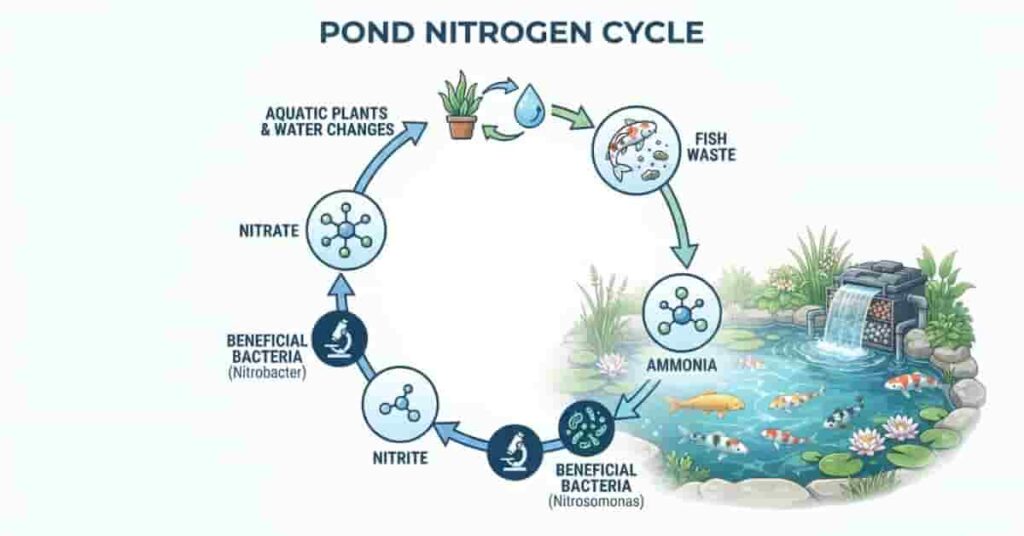
Beneficial bacteria keep your pond healthy by driving the pond nitrogen cycle, a natural process that removes harmful waste from the water. Every time fish eat, they produce waste. Uneaten food, decaying leaves, and other organic matter also break down, releasing ammonia into the pond.
Establishing a healthy bacterial colony is much easier when you use a high-quality commercial bacteria product. If you’re looking for the most effective options for koi ponds, garden ponds, or large water features, see our in-depth comparison of the best beneficial bacteria for ponds before you buy.
Ammonia is highly toxic to fish, even at low levels. Fortunately, nitrifying bacteria begin converting ammonia into nitrite. Although nitrite is slightly less harmful than ammonia, it is still dangerous to fish if it builds up.
A second group of beneficial bacteria then converts nitrite into nitrate. Nitrate is much less toxic and can be absorbed by aquatic plants or removed through regular water changes. This continuous process helps maintain stable water quality and supports a healthier environment for fish and plants.
Without enough beneficial bacteria, ammonia and nitrite levels can rise quickly, leading to cloudy water, stressed fish, poor biological filtration, and unhealthy pond conditions. That’s why establishing a healthy bacterial colony is one of the most important steps in long-term pond maintenance.
The Pond Nitrogen Cycle
The nitrogen cycle follows four simple steps:
- Fish waste and organic debris release ammonia into the pond.
- Ammonia is converted into nitrite by nitrifying bacteria.
- Nitrite is converted into nitrate by another group of beneficial bacteria.
- Nitrate is absorbed by pond plants or removed during routine water changes.
Pro Tip: Test your pond water regularly for ammonia, nitrite, and nitrate. Stable readings show that your beneficial bacteria are doing their job effectively.
Types of Beneficial Bacteria
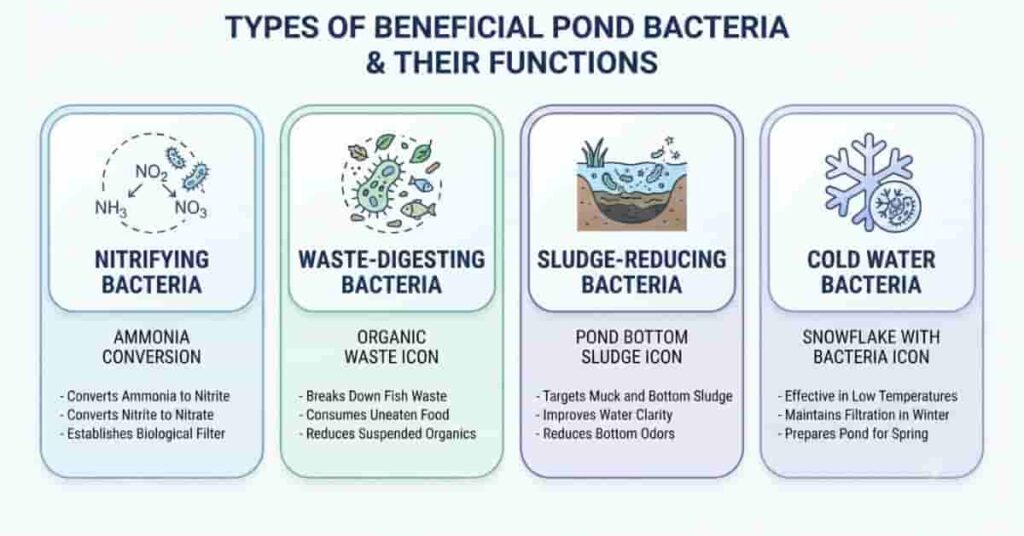
Not all beneficial bacteria for ponds perform the same job. Different groups specialize in breaking down waste, supporting biological filtration, or staying active in cooler temperatures. Together, they create a balanced pond ecosystem and help maintain healthy water quality throughout the year.
Understanding these bacteria makes it easier to choose the right pond treatment and know what to expect from commercial bacterial supplements.
Nitrifying Bacteria
Nitrifying bacteria are the backbone of your pond’s biological filtration system. They convert toxic ammonia from fish waste into nitrite and then into the much safer nitrate through the natural nitrogen cycle. This process helps protect fish from harmful water conditions and keeps the pond stable over time.
These bacteria grow mainly inside biological filters and on bio media, where oxygen-rich water flows continuously.
Waste-Digesting Bacteria
Waste-digesting bacteria feed on organic materials such as fish waste, uneaten food, dead leaves, and decaying plants. By breaking down this debris, they help reduce cloudy water, unpleasant odors, and excess organic waste before it accumulates on the pond floor.
They work best when combined with good filtration and regular pond maintenance.
Sludge-Reducing Bacteria
Sludge-reducing bacteria target the soft organic sludge that collects at the bottom of a pond. As they digest this material, they help reduce muck buildup, improve water clarity, and lower the nutrients that can contribute to algae growth.
While they can significantly reduce sludge over time, they cannot remove thick layers of debris overnight. Consistent use delivers the best results.
Cold Water Bacteria
Cold water bacteria are specially selected to remain active when water temperatures drop. Standard beneficial bacteria slow down in cold conditions, but cold water formulas continue breaking down waste during early spring, late fall, and mild winters.
These products are especially useful during spring pond startup, when waste has accumulated over winter but water is still too cold for regular bacteria to work efficiently.
Benefits of Beneficial Bacteria
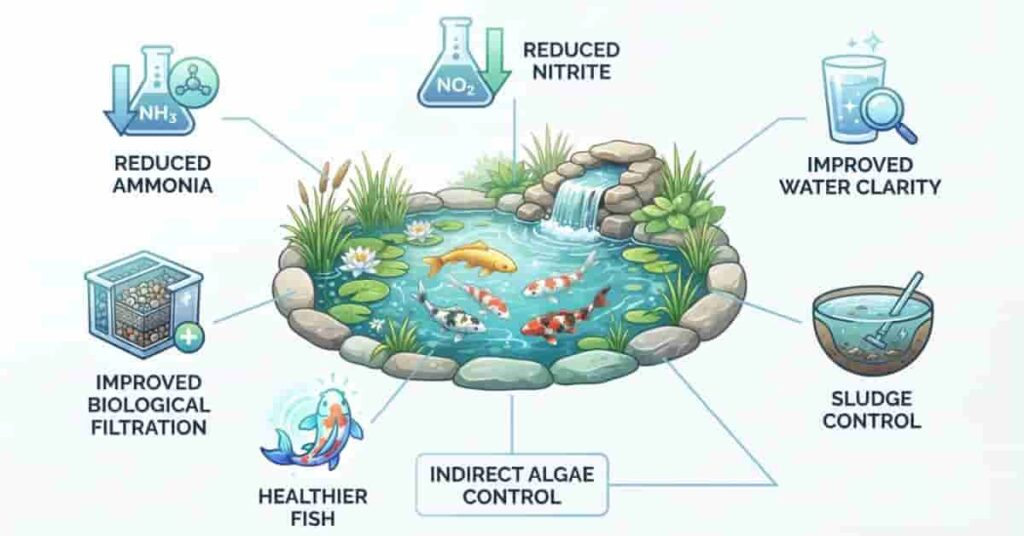
Beneficial bacteria do much more than keep pond water clear. They support nearly every part of a healthy pond ecosystem, from improving water quality to protecting fish from harmful waste. As bacterial colonies become established, they continuously break down organic matter and help maintain a stable biological balance.
While they are not a cure for every pond problem, they are one of the most effective long-term tools for maintaining clean, healthy water with less effort.
Reduces Ammonia
Fish waste and decaying organic matter release ammonia into the water. Even small amounts of ammonia can stress or harm pond fish. Beneficial bacteria convert ammonia into safer compounds through the nitrogen cycle, helping maintain healthier water conditions.
Reduces Nitrite
After ammonia is processed, it becomes nitrite, which is also harmful to fish. A second group of beneficial bacteria converts nitrite into nitrate, reducing the risk of nitrite spikes and supporting a more stable pond environment.
Improves Water Clarity
As bacteria break down suspended organic waste, the water gradually becomes cleaner and clearer. While they won’t clear cloudy water overnight, consistent use can noticeably improve water clarity over time.
Controls Organic Sludge
Leaves, fish waste, uneaten food, and dead algae eventually settle at the bottom of the pond. Beneficial bacteria digest this organic material, helping reduce sludge buildup, unpleasant odors, and the amount of debris that collects over time.
Supports Fish Health
Clean, balanced water creates a healthier environment for fish. By reducing harmful waste and improving overall water quality, beneficial bacteria help lower stress and support normal fish behavior. They do not treat diseases, but they help maintain conditions that promote healthier fish.
Improves Biological Filtration
Beneficial bacteria are the foundation of biological filtration. They colonize biofilters and other underwater surfaces, where they continuously process waste as water flows through the system. A mature biofilter makes the pond more stable and easier to maintain.
Helps Reduce Algae Growth
Beneficial bacteria do not kill algae directly. Instead, they break down organic waste before it releases excess nutrients into the water. With fewer nutrients available, algae have less food to grow, which can help reduce algae problems over time when combined with proper filtration, sunlight control, and regular pond maintenance.
Do Beneficial Bacteria Remove Algae?
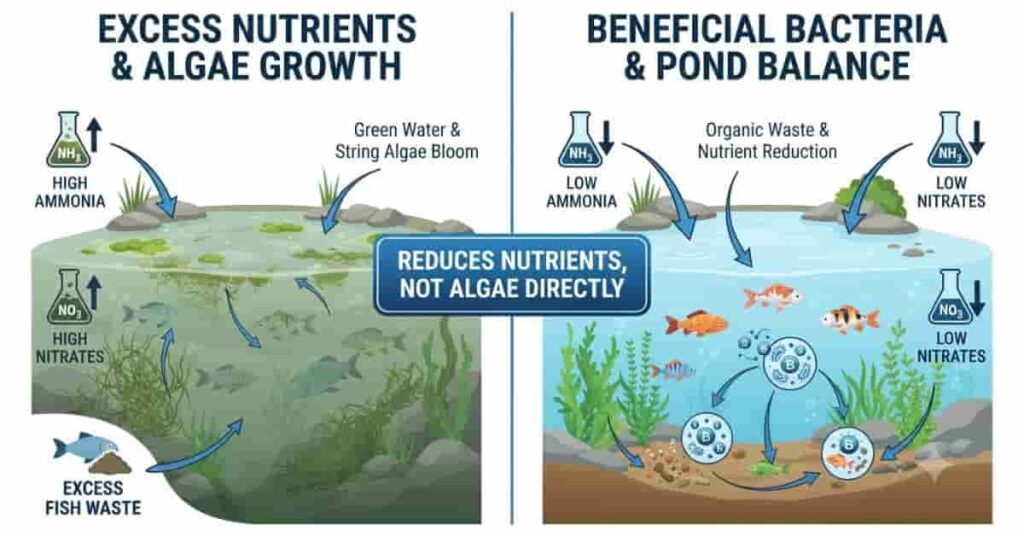
Many pond owners hope that beneficial bacteria for ponds will eliminate algae completely. While they play an important role in algae control, they are not an algae killer. Instead, beneficial bacteria help create a healthier pond environment by reducing the organic waste and excess nutrients that algae need to grow.
If your pond has severe algae problems, beneficial bacteria should be part of your overall maintenance routine. For the best results, combine them with proper filtration, regular water testing, adequate aeration, and balanced fish feeding.
Can They Prevent Green Water?
Beneficial bacteria can help reduce the conditions that lead to green water, but they cannot guarantee algae-free water. As they break down fish waste, uneaten food, and decaying organic matter, they reduce the nutrients that free-floating algae use as food.
If excess sunlight or high nutrient levels remain, green water may still develop. A properly sized UV clarifier and good pond maintenance are often needed alongside beneficial bacteria for long-term control.
Can They Reduce String Algae?
Beneficial bacteria may help reduce string algae over time by lowering the amount of organic waste that releases nutrients into the water. However, they do not directly attack or dissolve existing string algae.
If string algae has already spread across rocks, waterfalls, or pond edges, you’ll usually need to remove it manually. Beneficial bacteria can then help slow its return by improving overall water quality.
What They Can and Cannot Do
Here’s what beneficial bacteria realistically do:
✅ What They Can Do
- Break down fish waste and organic debris
- Reduce ammonia and nitrite
- Improve biological filtration
- Help reduce sludge buildup
- Lower excess nutrients that feed algae
- Support clearer, healthier pond water
❌ What They Cannot Do
- Kill algae instantly
- Remove heavy algae blooms overnight
- Replace proper filtration or water changes
- Fix poor pond maintenance on their own
- Treat fish diseases or parasites
Expert Tip: If algae is your biggest problem, focus on the root cause rather than the algae itself. Reducing excess nutrients, improving filtration, and using beneficial bacteria consistently will produce better long-term results than relying on algae treatments alone.
When Should You Add Beneficial Bacteria?
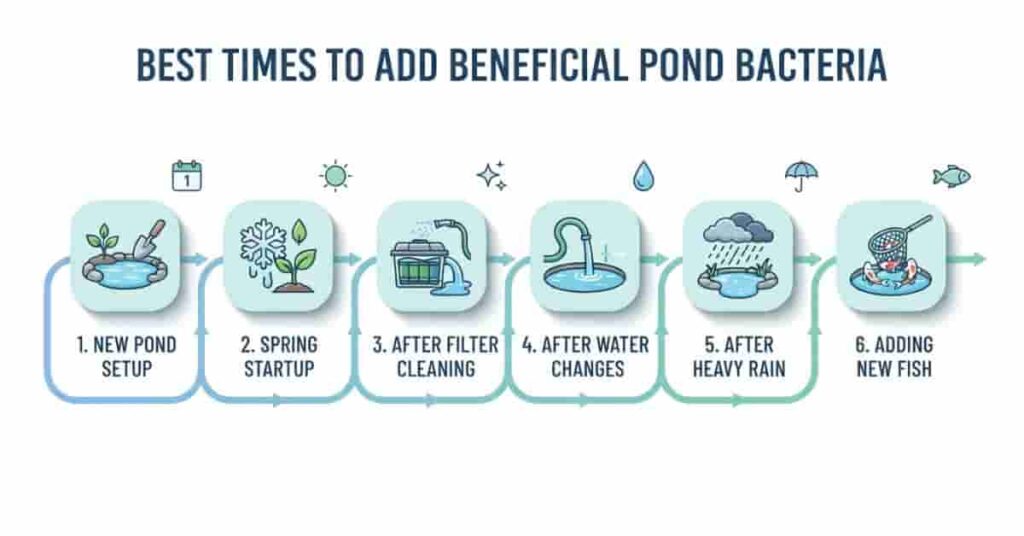
Timing plays an important role in how well beneficial bacteria for ponds work. Although these bacteria naturally grow over time, adding a commercial bacterial supplement during key moments can help establish healthy biological filtration faster and restore the balance after disruptions.
Here are the best times to add beneficial bacteria to your pond.
New Pond Setup
A new pond has very few beneficial bacteria, so it cannot process fish waste efficiently. Adding beneficial bacteria during setup helps establish the biological filter and speeds up the nitrogen cycle. Introduce fish gradually and monitor water quality until the bacterial colony becomes established.
Spring Startup
Beneficial bacteria become less active during cold winter months. As water temperatures rise in spring, adding fresh bacteria helps restart biological filtration, break down accumulated organic waste, and prepare the pond for increased fish activity.
After Cleaning the Filter
Cleaning your filter can remove some of the beneficial bacteria living on the filter media, especially if it is cleaned too thoroughly. Adding beneficial bacteria after maintenance helps replenish the colony and restore the filter’s biological performance more quickly.
Expert Tip: Rinse filter media with pond water instead of chlorinated tap water whenever possible. This helps preserve more of the existing beneficial bacteria.
After Water Changes
Routine water changes improve pond health, but they can also slightly disturb the pond’s biological balance. Adding beneficial bacteria afterward helps maintain a strong bacterial population and supports consistent water quality.
After Heavy Rain
Heavy rainfall can dilute water chemistry, introduce organic debris, and wash contaminants into the pond. Adding beneficial bacteria after a major rainstorm helps strengthen biological filtration and process the extra organic waste more efficiently.
When Adding New Fish
New fish increase the pond’s waste production almost immediately. Adding beneficial bacteria at the same time helps the biological filter adjust to the higher bioload and reduces the chance of ammonia or nitrite spikes.
How to Add Beneficial Bacteria to a Pond
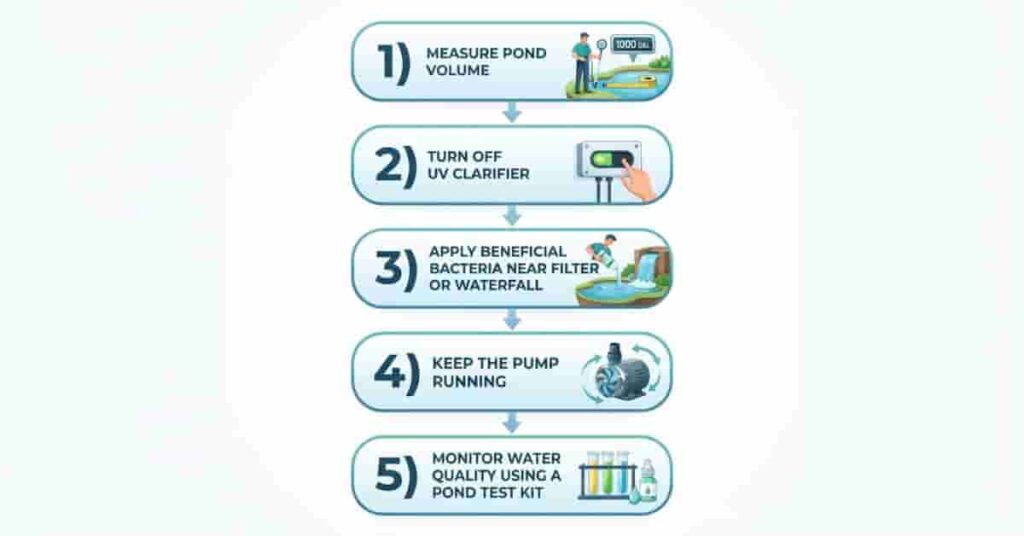
Adding beneficial bacteria for ponds is simple, but using them correctly helps you get the best results. Most pond bacteria products follow similar instructions, although the exact dosage may vary by brand. Always read the manufacturer’s label before application.
Follow these five steps to help establish a healthy bacterial colony and support long-term water quality.
Step 1: Measure Your Pond Volume
Start by calculating your pond’s total water volume. Most bacterial supplements are dosed based on gallons or liters, so knowing your pond size helps prevent underdosing or overdosing.
If you’re unsure of your pond’s volume, use a reliable Pond Volume Calculator before adding any treatment.
Step 2: Turn Off the UV Clarifier (If Recommended)
Many liquid bacterial products recommend turning off the UV clarifier for 24 to 48 hours after dosing. This gives the beneficial bacteria time to settle and colonize the filter and other pond surfaces before being exposed to UV light.
Always follow the instructions on your specific product, as recommendations can vary.
Step 3: Apply the Beneficial Bacteria
Shake liquid products well before use, if required. Then pour the recommended amount directly into the pond or near the waterfall, skimmer, or filter inlet where water circulation is strongest. This helps distribute the bacteria evenly throughout the pond.
Step 4: Keep the Pump Running
Leave your pond pump and filtration system running after application. Continuous water circulation spreads the bacteria throughout the pond and supplies the oxygen they need to establish healthy colonies.
Step 5: Monitor Water Quality
Over the next few days and weeks, check your pond for improvements in water clarity and test for ammonia and nitrite. Beneficial bacteria need time to grow, so consistent dosing and regular pond maintenance will produce the best long-term results.
Expert Tip: Avoid adding antibiotics, chlorine, or untreated tap water immediately after dosing. These can reduce or damage newly established bacterial colonies.
How Often Should You Add Beneficial Bacteria?
The ideal dosing schedule depends on your pond size, fish population, water temperature, and the type of bacterial product you use. Most manufacturers recommend regular applications because beneficial bacteria work best when healthy colonies are continuously maintained.
During the active pond season, consistent dosing usually produces better results than occasional large treatments.
Weekly
Weekly dosing is the most common recommendation for koi ponds, heavily stocked ponds, and ponds with frequent feeding. Regular applications help replace bacteria lost through filtration, water changes, and normal environmental conditions while keeping biological filtration working efficiently.
Bi-Weekly
Bi-weekly applications are often suitable for lightly stocked ponds with stable water quality. If your pond stays clear and water tests remain within safe levels, this schedule may provide enough bacterial support during the warmer months.
Monthly
Monthly dosing may be sufficient for ponds with a low fish load and minimal organic waste. However, if you notice cloudy water, sludge buildup, or rising ammonia levels, increasing the dosing frequency may produce better results.
Seasonal Maintenance
Many pond owners increase bacterial treatments during spring startup and reduce them as water temperatures fall. Some also switch to cold water bacteria during cooler months to support biological filtration when standard bacteria become less active.
How Long Does It Take to Work?
Beneficial bacteria begin working soon after they are added, but noticeable improvements take time. They must first attach to pond surfaces, multiply, and establish healthy colonies before they can process waste efficiently. The exact timeline depends on water temperature, oxygen levels, fish load, and the amount of organic waste in the pond.
Expected Timeline
Within 24 Hours
The bacteria become active and begin attaching to filter media, rocks, gravel, and other underwater surfaces. You probably won’t notice visible improvements yet, but the colonization process has started.
After 1 Week
In many ponds, beneficial bacteria begin breaking down more organic waste. Water quality may become more stable, and ammonia or nitrite levels may start improving if the pond conditions are favorable.
After 2–4 Weeks
A healthy bacterial colony is usually well established by this stage. Many pond owners notice clearer water, less sludge, fewer odors, and more consistent biological filtration. Continued maintenance helps keep these benefits long term.
Can You Add Too Much Beneficial Bacteria?
In most cases, adding too much beneficial bacteria is not harmful to your pond or fish. These bacteria are naturally occurring microorganisms, and any excess generally dies off or remains inactive if there is not enough organic waste available to support additional growth.
However, using more than the recommended amount usually does not make the bacteria work faster or produce better results. It can also increase maintenance costs by wasting product without providing extra benefits.
For the best performance, always follow the manufacturer’s dosage instructions. These recommendations are designed for the product’s bacterial concentration and your pond’s water volume.
Does UV Light Kill Beneficial Bacteria?
Many pond owners worry that a UV clarifier will kill all the beneficial bacteria in their pond. In reality, the answer is more nuanced. A UV clarifier can affect free-floating bacteria that pass through the unit, but it does not destroy the established bacterial colonies living on filter media, rocks, gravel, plant roots, and other pond surfaces.
UV Clarifiers
A UV clarifier uses ultraviolet light to control green water by damaging the cells of microscopic algae suspended in the water. As water passes through the unit, the UV light can also affect some free-floating beneficial bacteria before they settle.
Filter Bacteria
The vast majority of beneficial bacteria live inside the biological filter and on submerged surfaces. Once these bacteria attach and form colonies, they are protected from UV exposure because they no longer pass directly through the clarifier.
Best Practice When Dosing
Many bacterial supplements recommend turning off the UV clarifier for 24 to 48 hours after adding beneficial bacteria. This gives the bacteria time to settle and establish colonies before the UV system is switched back on. Always follow the instructions provided with your chosen product.
Does Pond Salt Affect Beneficial Bacteria?
Pond salt is commonly used to reduce fish stress and support certain treatments. At normal maintenance or treatment levels, it generally does not harm established beneficial bacteria. Most bacterial colonies continue functioning normally within the salt concentrations commonly used in koi ponds.
However, very high salinity can slow bacterial activity and reduce the efficiency of biological filtration. Elevated salt levels may also affect some bacterial strains more than others, especially if the concentration remains high for long periods.
If you use pond salt, always follow the recommended dosage and avoid unnecessary treatments. Maintaining proper aeration and monitoring water quality will help both your fish and beneficial bacteria thrive.
Beneficial Bacteria for Koi Ponds
Koi ponds depend heavily on beneficial bacteria because koi produce far more waste than most other pond fish. Without a strong bacterial colony, ammonia and nitrite can build up quickly, reducing water quality and increasing stress on the fish.
Why Koi Produce More Waste
Koi are large, active fish with healthy appetites. Frequent feeding and their larger body size create a continuous supply of fish waste and uneaten food that must be processed by beneficial bacteria.
Special Considerations
Koi ponds usually require larger biological filters, strong aeration, and regular water testing. Because of the heavier waste load, maintaining a healthy bacterial colony is even more important than in lightly stocked ornamental ponds.
Recommended Maintenance
For most koi ponds, weekly bacterial treatments during the active season help support biological filtration. Combine beneficial bacteria with proper filtration, routine water changes, and careful feeding for the best long-term results.
Expert Tip: Avoid overfeeding koi. Feeding only what they can eat in a few minutes reduces waste and makes it easier for beneficial bacteria to keep up.
Beneficial Bacteria for Large Ponds
Large ponds often contain more fish, more organic debris, and larger filtration systems. While the principles remain the same, maintaining beneficial bacteria in a large pond usually requires a more consistent maintenance routine.
Higher Waste Load
A larger pond typically receives more leaves, fish waste, and organic debris. Without enough beneficial bacteria, these materials can accumulate and reduce water quality over time.
Larger Biofilters
Large ponds usually rely on oversized biological filters with plenty of bio media. These filters provide the surface area needed for beneficial bacteria to establish large, healthy colonies capable of processing higher waste levels.
Dosing Frequency
Many large pond owners apply beneficial bacteria weekly during the warm season, especially if the pond has a heavy fish population. Always adjust the dosage according to your pond volume and the manufacturer’s recommendations.
Takeaways
- Large ponds produce more organic waste.
- Bigger biofilters support larger bacterial colonies.
- Regular dosing and strong circulation improve long-term water quality.
Signs Your Pond Needs More Beneficial Bacteria
A healthy pond naturally contains beneficial bacteria, but certain conditions can reduce their population or overwhelm their ability to process waste. If you notice any of the following signs, your pond may benefit from additional bacterial support.
Common signs include:
- Cloudy water that doesn’t improve with normal filtration.
- Ammonia or nitrite spikes shown by regular water testing.
- Bad odors caused by decomposing organic waste.
- Sludge buildup on the pond bottom or around rocks.
- Poor water clarity despite routine maintenance.
- Fish stress, such as reduced activity or unusual behavior linked to poor water quality.
These symptoms can also have other causes, so always confirm the problem with a reliable pond water test before adding treatments.
Common Mistakes to Avoid
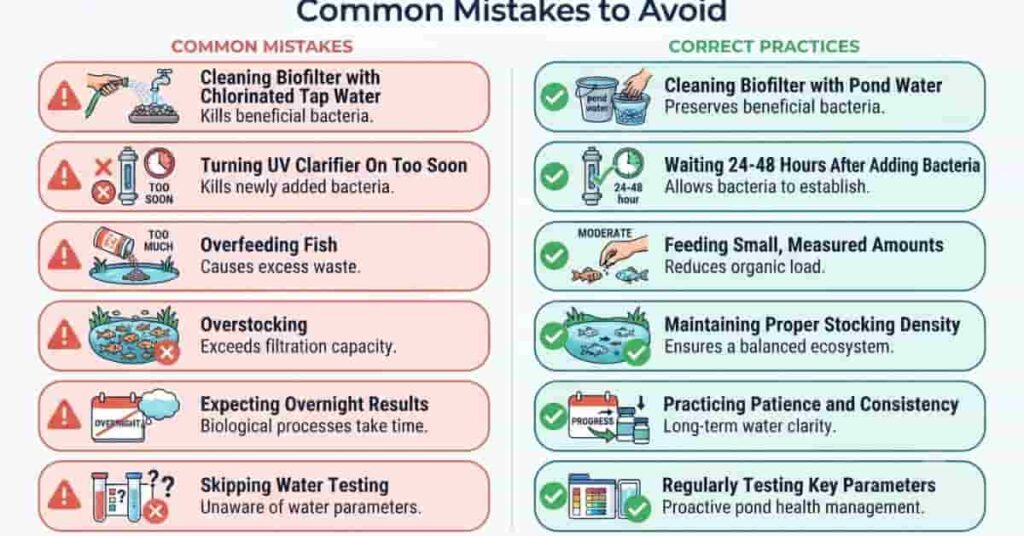
Even the best beneficial bacteria for ponds cannot perform well if basic pond maintenance is overlooked. Avoiding these common mistakes helps your bacterial colony stay healthy and your pond remain balanced.
- Cleaning the biofilter with chlorinated tap water: Chlorine can kill beneficial bacteria living on the filter media. Rinse filters with pond water whenever possible.
- Turning the UV clarifier back on immediately after dosing: Give newly added bacteria enough time to settle before restarting the UV system, following the product’s instructions.
- Expecting overnight results: Beneficial bacteria need time to multiply and establish stable colonies. Visible improvements often take several weeks.
- Overstocking fish: Too many fish create more waste than the biological filter can process.
- Overfeeding: Uneaten food increases organic waste and places extra strain on the biological filter.
- Ignoring water testing: Regular testing for ammonia, nitrite, nitrate, and pH helps you identify problems before they affect fish health.
Pro Tip: Consistency beats quick fixes. Regular maintenance, proper feeding, and routine bacterial dosing produce the healthiest ponds over time.
Recommended Products
Healthy beneficial bacteria naturally develop in every well-established pond, but building a strong bacterial colony takes time. In many situations, a commercial beneficial bacteria supplement can help speed up the process, especially when starting a new pond, restarting a pond in spring, recovering after filter cleaning, or restoring biological filtration following water quality problems.
The best products contain carefully selected bacterial strains that help break down organic waste, support the nitrogen cycle, and improve overall water quality. While they are not a substitute for proper filtration and routine maintenance, they can be a valuable part of a complete pond care program.
👉 Looking for the best product? Read our detailed guide: Best Beneficial Bacteria for Ponds, where we compare the top options, explain their key features, and help you choose the right bacterial supplement for your pond.
Final Thoughts
Beneficial bacteria for ponds are one of the most important parts of a healthy pond ecosystem. They break down organic waste, support the nitrogen cycle, improve biological filtration, and help maintain cleaner, healthier water for fish and aquatic plants. While they won’t solve every pond problem on their own, they provide the foundation for long-term water quality.
For the best results, combine beneficial bacteria with routine pond maintenance, regular water testing, proper filtration, and responsible fish feeding. These simple habits help prevent ammonia spikes, reduce sludge buildup, and keep your pond balanced throughout the year.
If your pond is new, recovering from maintenance, or showing signs of poor water quality, a high-quality bacterial supplement can help establish or restore healthy biological filtration more quickly. Choose a product that matches your pond’s size, season, and maintenance needs, then use it consistently according to the manufacturer’s instructions.
Looking for a reliable bacteria treatment? We’ve tested and compared the most popular pond bacteria products based on effectiveness, ease of application, value, and customer feedback. Check out our complete Best Beneficial Bacteria for Ponds buying guide to find the right option for your pond.
With the right care and a strong population of beneficial bacteria, your pond can stay cleaner, clearer, and healthier all year long.
Frequently Asked Questions
Everything you need to know about beneficial bacteria for ponds.

Michael Brooks and Sarah Lane are the co-founders of the Pond Pump Team, a trusted U.S.-based group helping homeowners and landscapers build better ponds and water features. Michael, an experienced pond engineer from Oregon, has worked for over 12 years on pump sizing, flow systems, and water circulation. Sarah, a pond designer from Colorado with nine years of experience, focuses on eco-friendly and easy-to-maintain pond and waterfall designs. Together, they’ve completed more than 180 pond projects and created tools like the Pond Pump Calculator and Pond Liner Calculator to make pond planning simple, accurate, and sustainable.
Need help with your pond setup? Contact the Pond Pump Team for expert advice and reliable solutions.