Table of Contents
Introduction
Pond temperature plays a major role in the health, behavior, and overall well-being of koi fish. Unlike many pond factors that change slowly, water temperature can directly affect how koi digest food, use energy, fight off stress, and respond to seasonal changes. Even a small temperature shift can influence their activity levels and daily care needs.
Koi fish are hardy and can survive in a wide range of temperatures, but sudden changes are often more harmful than the temperature itself. Rapid warming or cooling can stress koi, weaken their immune response, and make them more vulnerable to health problems.
That is why monitoring your pond water temperature regularly is an important part of responsible koi keeping. Using a reliable pond thermometer makes it easier to track seasonal changes and adjust koi care routines, including feeding schedules, oxygen management, and winter preparation.
In this guide, we will explain the ideal pond temperature for koi fish, seasonal temperature ranges, feeding recommendations, and how to maintain stable water conditions throughout the year.
For accurate temperature monitoring, choosing the right thermometer can help you make better koi care decisions throughout the year. Check out our Best Pond Thermometers for Koi Ponds guide for reliable options.
Maintaining healthy pond conditions also requires regular water testing. Our Best Pond Water Test Kits for Koi Ponds guide covers useful tools for monitoring essential water parameters.
Why Pond Temperature Matters for Koi Fish
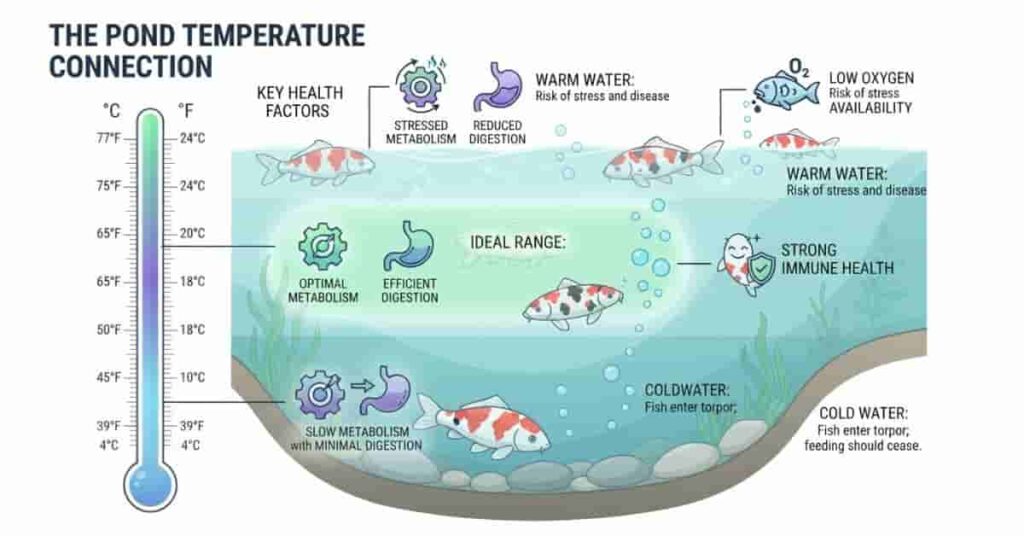
Pond temperature is one of the most important factors that affects koi health, behavior, and daily care. Changes in water temperature influence how koi use energy, digest food, respond to their environment, and maintain their overall health.
Temperature Affects Koi Metabolism
Koi metabolism changes based on the temperature of their surrounding water. During warmer months, koi become more active because their metabolism increases, which also improves digestion and feeding response.
In colder water, koi metabolism slows down significantly. They move less, require less energy, and their ability to digest food decreases. This is why koi feeding schedules should always be adjusted according to water temperature.
Temperature Affects Feeding Habits
Koi do not require the same amount of food throughout the year. When water temperatures are higher, koi can digest food more efficiently and usually need regular feeding.
As temperatures drop, their digestive system slows down, and overfeeding can lead to health issues and poor water quality. Monitoring temperature helps koi owners know when to increase, reduce, or stop feeding.
Temperature Affects Oxygen Levels
Water temperature also affects the amount of dissolved oxygen available in a pond. Warm water holds less oxygen than cooler water, which can create stress for koi during hot summer conditions.
When pond temperatures rise, koi may show signs of stress, such as staying near the surface or gasping for air. Maintaining proper aeration and monitoring water conditions becomes especially important during warmer periods.
Temperature Affects Disease Resistance
Sudden temperature changes can weaken koi immunity and make them more vulnerable to health problems. Stable water conditions help koi handle seasonal changes more effectively and reduce unnecessary stress.
Temperature is only one part of pond health. Regular water testing helps monitor other important factors that affect koi, including pH, ammonia, nitrite, and overall water quality. Best Pond Water Test Kits for Koi Ponds can help koi owners maintain a healthier environment by identifying hidden water problems early.
Ideal Temperature Range for Koi Fish
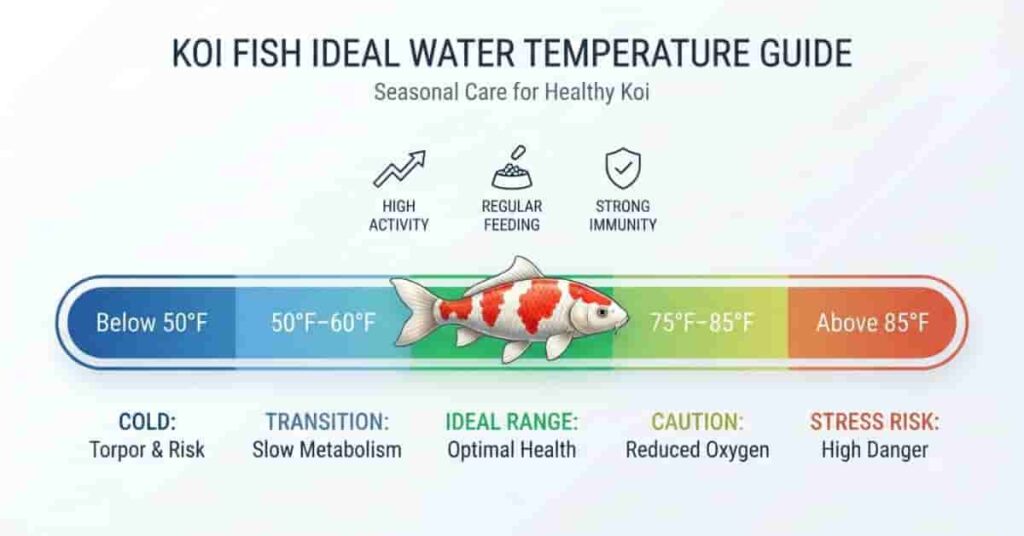
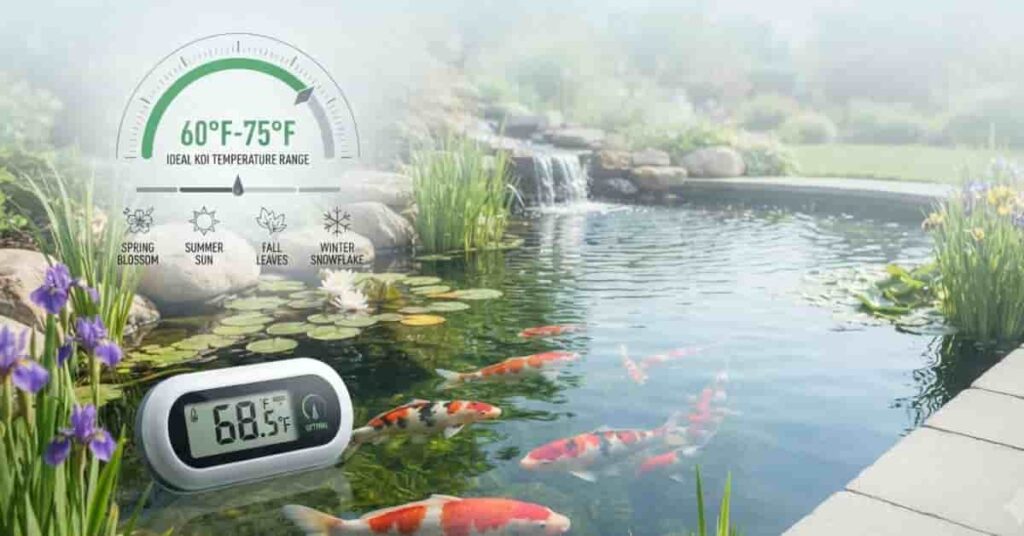
The ideal pond temperature for koi fish is around 60°F–75°F (15°C–24°C). Within this range, koi are usually active, able to digest food properly, and maintain strong overall health.
However, koi are adaptable fish that can survive in colder and warmer conditions when changes happen gradually. The most important factor is not only the temperature itself but also avoiding sudden temperature fluctuations that can cause stress.
Use the chart below as a general guide for understanding how koi respond to different water temperatures:
| Water Temperature | Koi Activity | Care Recommendation |
|---|---|---|
| Below 50°F | Very slow activity | Stop feeding |
| 50°F–60°F | Reduced metabolism | Feed lightly |
| 60°F–75°F | Active and healthy | Normal feeding |
| 75°F–85°F | Increased stress risk | Monitor oxygen levels |
| Above 85°F | Heat stress possible | Take action |
During the warmer months, koi require extra attention because higher temperatures reduce dissolved oxygen levels in pond water. In colder months, their metabolism slows down, meaning they need less food and a different care approach.
Keeping track of your koi pond temperature throughout the year allows you to make better decisions about feeding, aeration, and seasonal pond maintenance. A consistent monitoring routine helps create a stable environment where koi can remain healthy in changing weather conditions.
Koi Pond Temperature Chart by Season
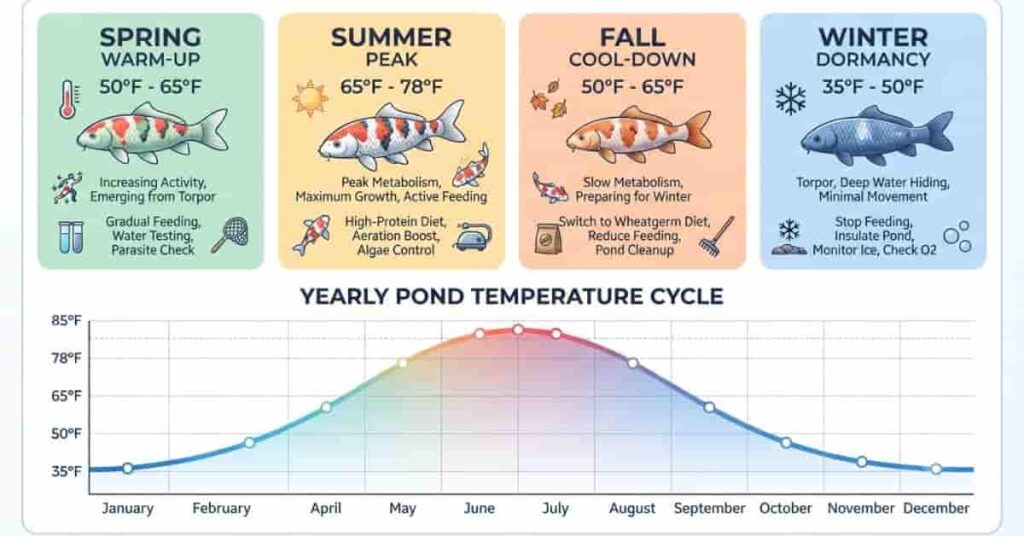
Koi pond temperature changes naturally throughout the year, and each season requires a slightly different approach to koi care. Understanding seasonal temperature patterns helps you adjust feeding, monitor water conditions, and prepare your pond for changing weather.
While koi can tolerate a wide range of temperatures, gradual changes are healthier than sudden temperature swings. Use the seasonal guide below as a general reference:
| Season | Temperature Range | Main Care Focus |
|---|---|---|
| Spring | 50°F–65°F | Slowly increase feeding |
| Summer | 70°F–85°F | Maintain oxygen levels |
| Fall | 50°F–65°F | Prepare koi for winter |
| Winter | Below 50°F | Stop feeding and reduce stress |
During spring, koi become more active as water warms, but their metabolism takes time to adjust. Feeding should be increased gradually to avoid digestive problems and unnecessary waste buildup.
In summer, higher pond temperatures can reduce oxygen levels and increase fish stress. Regular monitoring, proper aeration, and stable water conditions become especially important during hot weather.
During fall, koi begin preparing for colder temperatures. Reducing feeding gradually and maintaining good water quality helps them transition safely into winter.
In winter, koi enter a low-activity state as their metabolism slows down. When temperatures drop below 50°F, feeding should usually stop because koi cannot digest food properly in very cold water.
Spring Pond Temperatures and Koi Care
As winter comes to an end, pond water gradually begins to warm and koi slowly become more active again. During this transition period, koi metabolism starts increasing, but their digestive system may still be adjusting after months of lower activity.
Although koi may appear hungry as temperatures rise, it is important to increase feeding slowly. Feeding too much too early can lead to digestive problems and excess waste, which can negatively affect pond water quality.
Spring Feeding Tips for Koi
Start With Small Amounts
When pond temperatures begin rising above 50°F, offer koi small amounts of food and observe how quickly they eat. Gradually increase feeding as their activity levels improve.
Use Easily Digestible Food
Spring is a good time to use easily digestible koi food that is suitable for cooler water temperatures. This helps koi receive nutrition without putting unnecessary stress on their digestive system.
Avoid Overfeeding
Uneaten food can break down and increase ammonia levels in the pond. Since spring temperature changes can affect water conditions, keeping feeding controlled helps maintain a healthier environment.
Spring temperature changes can also create water quality challenges as koi become more active. Regular testing helps monitor important factors such as ammonia, nitrite, and pH levels. A quality water testing kit like the Best Pond Water Test Kits for Koi Ponds can help identify potential problems before they affect your fish.
Summer Pond Temperatures and Heat Management
During summer, pond water temperatures can rise quickly, especially in shallow ponds or during long periods of hot weather. While koi are generally comfortable in warmer water, excessive heat can create stressful conditions and increase the risk of health problems.
High temperatures affect the entire pond environment, not just the fish. As water warms, oxygen levels decrease, waste breaks down differently, and algae growth can increase. This makes summer monitoring and proper pond management especially important.
Problems Caused by High Pond Temperatures
Lower Oxygen Levels
Warm water holds less dissolved oxygen than cooler water. When oxygen levels drop, koi may become stressed and show signs such as staying near the surface or gasping for air.
Increased Fish Stress
Extended periods of high temperatures can put extra stress on koi. Stress can weaken their natural defenses and make them more vulnerable to health issues.
Faster Algae Growth
Warmer temperatures combined with longer daylight hours can encourage algae growth. Excess algae can affect water clarity and compete with fish for oxygen, especially at night.
Higher Waste Production
Active koi eat more during warmer months, which means they produce more waste. Without proper filtration and maintenance, this can quickly affect water quality.
Tips for Managing Hot Pond Temperatures
Increase Aeration
Adding extra aeration during hot weather helps improve oxygen availability and keeps koi more comfortable. Air pumps, waterfalls, and fountains can all support better oxygen exchange.
Provide Shade
Adding aquatic plants, shade structures, or other cover can help reduce direct sunlight and prevent extreme temperature increases.
Avoid Overfeeding
Although koi are more active in summer, overfeeding can increase waste levels and create water quality problems. Feed only what your koi can consume within a few minutes.
Check Temperature Regularly
Monitoring pond temperature allows you to respond quickly when water becomes too warm. Using a reliable pond thermometer helps track temperature changes and makes it easier to adjust summer pond care routines.
For accurate monitoring throughout hot weather, check out Best Pond Thermometers for Koi Ponds.
Fall Pond Temperatures and Preparing Koi for Winter
As summer ends and temperatures begin to drop, koi gradually adjust to cooler pond conditions. During fall, their metabolism slows down, which means they become less active and require less food compared to the warmer months.
This seasonal transition is an important time to prepare your pond for winter. Reducing feeding gradually, maintaining good water quality, and monitoring temperature changes can help koi enter colder months in a healthier condition.
Adjust Feeding as Temperatures Drop
As pond temperatures decrease, koi digest food more slowly. Continuing to feed the same amount as summer can lead to uneaten food, increased waste, and poor water quality.
Reduce feeding gradually as koi activity decreases. Once temperatures approach colder ranges, switch to lighter feeding or stop feeding completely based on the water temperature rather than the season alone.
Prepare Your Pond Before Freezing Weather
Fall is the best time to complete important pond maintenance before winter arrives. A clean and stable pond environment helps reduce stress on koi during colder months.
Fall Pond Maintenance Checklist
Test Water Quality
Temperature changes can affect pond conditions, including ammonia and oxygen levels. Testing your water before winter helps identify problems early and ensures koi enter the colder season in a healthier environment.
Regular water testing is an important part of seasonal koi care. A reliable kit such as the Best Pond Water Test Kits for Koi Ponds helps monitor essential water parameters and detect potential issues before they become serious.
Remove Excess Leaves
Falling leaves can accumulate in the pond and break down over time, increasing organic waste. Removing excess debris helps maintain cleaner water and reduces the workload on your filtration system.
Check Filtration
Inspect your filter, pumps, and other equipment before winter temperatures arrive. Proper filtration helps maintain water quality even when koi activity decreases.
Monitor Temperature Changes
Keep track of pond temperature during fall because gradual cooling is normal, but sudden drops can stress koi. Regular monitoring helps you make better decisions about feeding and winter preparation.
Winter Pond Temperatures and Cold Weather Care
As pond temperatures continue to drop during winter, koi naturally become less active and their metabolism slows down. This is a normal survival response that helps them conserve energy when food sources and activity levels are limited.
In cold water, koi enter a resting state where they spend more time near the bottom of the pond and move much less than they do during warmer months. During this period, their care requirements change significantly, and unnecessary disturbances should be avoided.
Stop Feeding Koi in Cold Temperatures
When water temperatures drop below around 50°F (10°C), koi have difficulty digesting food properly because their digestive system slows down. Continuing to feed during very cold conditions can result in uneaten food, digestive problems, and poor water quality.
Instead of following a calendar schedule, use pond temperature as your guide. Once koi enter their winter resting period, feeding should stop until temperatures rise again in spring.
Avoid Disturbing Koi During Winter
Cold temperatures already place koi under natural stress, so unnecessary handling, moving fish, or major pond changes should be avoided during winter.
Allow koi to remain calm and maintain a stable environment. Sudden changes in water conditions can be more harmful during colder months when their metabolism and immune response are reduced.
How Koi Survive Cold Winters
Koi are cold-water fish and can survive winter conditions when their pond environment is properly maintained. The most important factors include:
Adequate Pond Depth
A deeper pond provides more stable temperatures because deeper water does not fluctuate as quickly as shallow water. This allows koi to remain in a safer environment during freezing weather.
Continuous Oxygen Exchange
Even in winter, koi need access to oxygen. Keeping part of the pond surface open allows proper gas exchange and prevents harmful gases from building up under ice.
Stable Water Quality
Good water quality is essential throughout the winter months. Waste buildup, poor oxygen levels, and sudden water changes can create additional stress for koi.
Some pond owners use pond salt as part of their koi care routine during certain situations, but it should always be used correctly and with proper measurements. Best Pond Salt for Koi Ponds can help you understand suitable salt options and safe usage practices.
Because incorrect salt levels can create problems, accurate measurement is important. Measuring salt levels accurately prevents incorrect dosing, and a reliable tool like Best Pond Salt Meters for Koi Ponds helps koi owners maintain proper salinity levels when using salt treatments.
When Should You Stop Feeding Koi?
Knowing when to stop feeding koi is an important part of seasonal pond care. Koi do not require the same amount of food throughout the year because their metabolism changes with water temperature.
As pond water becomes colder, koi become less active and their digestive system slows down. Feeding based on temperature rather than a fixed schedule helps prevent health problems and keeps your pond water cleaner.
Use the temperature guide below to adjust your koi feeding routine:
| Water Temperature | Feeding Recommendation |
|---|---|
| Above 65°F | Normal feeding |
| 55°F–65°F | Reduce feeding |
| 50°F–55°F | Feed lightly |
| Below 50°F | Stop feeding |
Why Koi Cannot Digest Food Properly in Cold Water
Koi are cold-blooded animals, which means their body functions are directly affected by water temperature. When the water becomes cold, their metabolism slows and their digestive system cannot process food as efficiently.
If koi eat more food than they can digest during cold conditions, the food may remain undigested and cause internal health problems. This is why feeding should always be reduced gradually as temperatures drop.
Risks of Overfeeding Koi in Cold Weather
Digestive Problems
Feeding koi when their metabolism is too slow can lead to digestive stress and other health issues. Waiting until temperatures rise again allows their digestive system to function normally.
Poor Water Quality
Uneaten food breaks down in the pond and adds unnecessary organic waste. This can make water quality harder to maintain, especially during winter when natural processes slow down.
Increased Ammonia Levels
Extra waste from uneaten food and fish waste can increase ammonia levels, which can be harmful to koi. Regular monitoring of pond conditions helps prevent these problems.
By adjusting feeding habits according to pond temperature, you can support healthier koi and maintain better water conditions throughout seasonal changes.
How to Monitor Pond Temperature Accurately
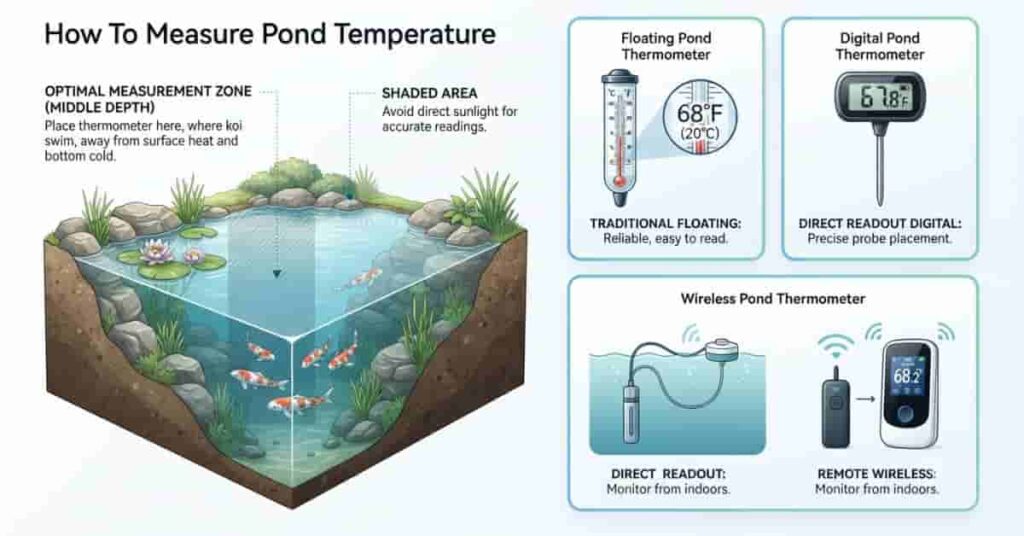
Regularly checking your pond temperature is one of the easiest ways to understand koi behavior and adjust their care routine throughout the year. Since temperature affects feeding, activity levels, oxygen needs, and seasonal changes, accurate readings help you make better decisions for your fish.
For the most reliable results, temperature should be measured in a consistent location rather than just at the pond surface.
Best Place to Measure Pond Temperature
Middle of the Pond
Avoid measuring temperature only near the edges because these areas can change more quickly due to sunlight, wind, or outside temperatures. The middle of the pond usually provides a more accurate overall reading.
Similar Depth Where Koi Swim
Koi spend most of their time at different depths depending on the season. Measuring water temperature around their usual swimming depth gives a better understanding of the conditions they experience.
Away From Direct Sunlight
Direct sunlight can warm the thermometer and create inaccurate readings. Place your thermometer in a shaded area or underwater location where it can measure the actual pond temperature.
Types of Pond Thermometers
Different types of thermometers are available depending on your monitoring needs and budget.
Floating Thermometers
Floating pond thermometers are a simple and affordable option for basic temperature monitoring. They float on the water surface and allow you to quickly check current pond temperatures without complicated setup.
Benefits:
- Affordable option
- Easy to use
- Requires no batteries in many models
- Good for basic temperature checks
Digital Pond Thermometers
Digital pond thermometers provide faster and easier-to-read temperature measurements compared to traditional analog models. They are a good choice for pond owners who want clearer readings and more convenience.
Benefits:
- Faster temperature readings
- Easy-to-read digital display
- More precise measurements
Wireless Pond Thermometers
Wireless pond thermometers are a more advanced option for koi owners who want to monitor temperature remotely. These systems can allow you to check pond conditions without going outside frequently.
Benefits:
- Remote temperature monitoring
- Convenient for year-round tracking
- Useful for larger ponds or changing weather conditions
Choosing the right thermometer depends on your pond size, monitoring needs, and budget. For a detailed comparison of available options, check our guide to Best Pond Thermometers for Koi Ponds.
How Often Should You Check Pond Temperature?
Regularly monitoring your pond temperature helps you understand how your koi are responding to seasonal changes and allows you to adjust feeding, aeration, and overall pond care when needed.
The frequency of temperature checks depends on weather conditions and how quickly the pond environment is changing. During stable periods, checking a few times per week is usually enough. However, during extreme temperature changes, more frequent monitoring can help prevent stress and health problems.
Normal Conditions
During mild and stable weather, check your pond temperature several times per week. This helps you track gradual changes and notice when koi care routines need to be adjusted.
Regular monitoring is especially useful during seasonal transitions when temperatures slowly move from one range to another.
Extreme Seasons
During periods of rapid temperature changes, check your pond temperature daily. Frequent monitoring allows you to respond quickly and make necessary adjustments before koi become stressed.
Times When Extra Monitoring Is Important
Heat Waves
During hot weather, pond temperatures can rise quickly and reduce oxygen levels. Daily checks help you identify overheating risks and take action, such as increasing aeration or providing shade.
Spring Warming
As winter ends and temperatures begin rising, koi become more active and feeding routines change. Monitoring temperature helps you know when to adjust feeding amounts safely.
Winter Freezing
During freezing conditions, temperature monitoring helps you understand when koi enter their resting period and when feeding should stop. It also helps ensure the pond remains stable throughout cold weather.
Keeping a consistent temperature monitoring routine makes it easier to maintain a healthy koi pond throughout the year and prevents sudden changes from catching you unprepared.
Signs Your Pond Is Too Hot
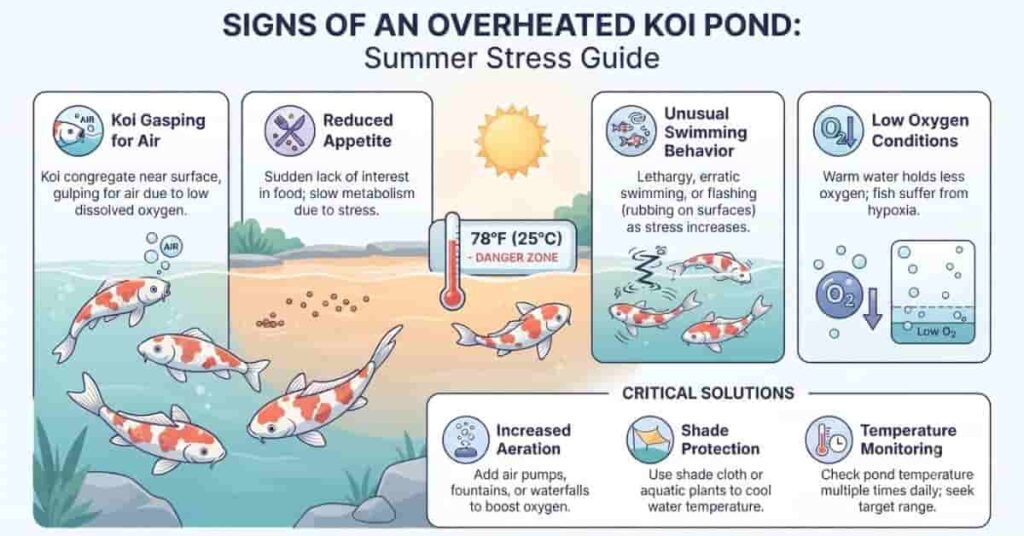
When pond temperatures rise above the comfortable range for koi, they can begin showing signs of heat stress. Warm water affects the entire pond ecosystem by reducing oxygen levels and increasing the activity of bacteria and algae.
Recognizing the early warning signs of overheating allows you to take action before your koi experience serious stress or health problems.
Symptoms of an Overheated Pond
Koi Staying Near the Surface
If koi are spending more time near the surface of the pond, they may be looking for areas with higher oxygen levels. Warm water naturally contains less dissolved oxygen, which can make fish move closer to the surface where oxygen exchange occurs.
Gasping for Air
Koi gasping at the surface or appearing to struggle for oxygen is a sign that your pond may not have enough available oxygen. This can become more common during hot weather, especially in ponds with heavy fish loads or limited aeration.
Reduced Appetite
Although koi are usually more active in warmer temperatures, excessive heat can cause stress and reduce their interest in food. Avoid increasing feeding when koi are showing signs of heat stress.
Unusual Swimming Behavior
Heat stress can cause koi to behave differently. They may become less active, swim irregularly, hide more often, or stay in cooler areas of the pond.
How to Cool and Stabilize a Hot Pond
Add Aeration
Increasing oxygen levels is one of the most important steps during hot weather. Adding air pumps, waterfalls, or fountains can improve oxygen exchange and make the pond environment more comfortable.
Create Shade
Providing shade helps reduce direct sunlight exposure and prevents extreme temperature increases. Aquatic plants or shade structures can help create cooler areas for koi.
Reduce Feeding
During periods of excessive heat, reduce feeding amounts because koi may not digest food efficiently when stressed. Extra uneaten food can also increase waste and affect water quality.
Check Water Quality
High temperatures can quickly affect pond conditions, especially oxygen levels, ammonia, and overall water quality. Regular water testing helps identify hidden problems that may add extra stress to koi. A reliable kit like the Best Pond Water Test Kits for Koi Ponds can help monitor important water parameters and keep your pond healthier during hot weather.
Signs Your Pond Is Too Cold
As pond temperatures drop, koi naturally become less active and their metabolism slows down. This behavior is normal during colder months because koi conserve energy and enter a resting state.
However, extremely cold conditions or sudden temperature drops can still create stress. Understanding the signs of a cold pond helps you adjust your care routine and avoid actions that may harm your fish.
Symptoms of a Pond That Is Too Cold
Slow Movement
When water temperatures become low, koi move much less than they do during warmer seasons. They may swim slowly, remain in one area for longer periods, and show reduced activity.
This is a natural response as their metabolism decreases and their energy requirements become lower.
Staying at the Bottom of the Pond
During winter, koi often stay near the deepest part of the pond where temperatures are more stable. Remaining near the bottom is a common behavior as they try to conserve energy and avoid colder surface conditions.
No Feeding Response
Cold water significantly slows koi digestion. If koi show little or no interest in food, it is usually a sign that their metabolism is too slow for regular feeding.
Avoid offering food when temperatures are too low because uneaten food can break down and negatively affect water quality.
How to Care for Koi in Cold Water
Stop Feeding
When pond temperatures fall below the recommended feeding range, stop feeding koi. Their digestive system cannot process food properly in very cold water.
Avoid Disturbing Fish
During winter, koi should be left undisturbed as much as possible. Handling fish, cleaning the pond unnecessarily, or making sudden changes can create additional stress.
Maintain Oxygen Exchange
Even in cold weather, koi still need oxygen. Keep proper gas exchange by maintaining an open area on the pond surface and ensuring the pond environment remains stable.
Cold temperatures may also require closer attention when using pond treatments or salt. Accurate measurement helps prevent incorrect salt levels, and a reliable tool like the Best Pond Salt Meters for Koi Ponds can help koi owners monitor salinity properly when salt is used as part of pond care.
How to Maintain Stable Pond Temperature Year-Round
Maintaining a stable pond temperature is one of the best ways to support healthy koi throughout all seasons. While koi can adapt to changing temperatures, sudden fluctuations can cause stress and affect their feeding habits, activity levels, and overall health.
A well-designed pond combined with regular monitoring can help reduce extreme temperature changes and create a more consistent environment for your fish.
Maintain Proper Pond Depth
Pond depth plays an important role in temperature stability. Deep ponds experience fewer temperature swings because deeper water changes temperature more slowly than shallow water.
During summer, deeper areas provide cooler spaces where koi can escape excessive heat. In winter, deeper water remains more stable and gives koi a safer area to rest.
Add Aquatic Plants for Natural Shade
Aquatic plants help regulate pond temperature by providing natural shade and reducing direct sunlight exposure. Plants such as water lilies can create cooler areas where koi can seek protection during hot weather.
In addition to temperature control, healthy aquatic plants can also improve the overall pond environment.
Improve Aeration
Proper aeration helps maintain a healthier pond environment, especially during warm weather. Since hot water holds less oxygen, increasing oxygen circulation can reduce stress on koi during high temperatures.
Air pumps, waterfalls, and fountains can improve water movement and support better oxygen exchange throughout the pond.
Avoid Sudden Water Changes
Large temperature differences between new water and existing pond water can stress koi. When performing water changes, try to match the new water temperature as closely as possible to the pond temperature.
Gradual changes are much safer for koi because they allow their bodies to adjust naturally.
Monitor Water Conditions Regularly
Temperature and water quality work together to create a healthy koi environment. A pond with the right temperature can still experience problems if ammonia, nitrite, pH, or oxygen levels are not properly maintained.
Regular monitoring helps you identify changes early and make adjustments before koi experience stress.
Using a reliable thermometer makes it easier to track seasonal temperature changes, while regular water testing provides a complete picture of pond health. Check out Best Pond Thermometers for Koi Ponds for accurate temperature monitoring and Best Pond Water Test Kits for Koi Ponds to maintain better water quality throughout the year.
Conclusion
Maintaining the right pond temperature is an important part of keeping koi fish healthy throughout the year. While koi can adapt to different seasonal conditions, stable water temperatures help support normal metabolism, digestion, activity levels, and immune health.
From the warming temperatures of spring to the cold conditions of winter, each season requires different care. Adjusting feeding schedules, maintaining proper oxygen levels, and monitoring temperature changes can help prevent unnecessary stress and keep your koi in better condition.
Regular temperature checks also make it easier to respond quickly when conditions become too hot or too cold. Using a reliable pond thermometer along with proper water testing allows you to create a more stable and healthier pond environment.
By understanding how temperature affects koi behavior and following seasonal care practices, you can provide the conditions your fish need to stay active, healthy, and comfortable all year long.
Frequently Asked Questions (FAQs)
The ideal pond temperature for koi fish is around 60°F–75°F (15°C–24°C). Within this range, koi are usually active, digest food properly, and maintain good overall health. However, koi can tolerate a wider temperature range when changes happen gradually.
Pond temperatures above 85°F (29°C) can become stressful for koi because warm water holds less dissolved oxygen. During hot weather, koi may show signs of stress such as staying near the surface, reduced appetite, or unusual swimming behavior. Increasing aeration, providing shade, and monitoring water quality can help during extreme heat.
You should generally stop feeding koi when pond water temperatures drop below 50°F (10°C). At this temperature, koi metabolism slows significantly, and they cannot digest food properly. Feeding during very cold conditions can lead to digestive problems and poor water quality.
Yes, koi can survive freezing temperatures when they have a properly maintained pond environment. A pond with adequate depth, stable water quality, and proper oxygen exchange allows koi to safely enter their winter resting state. Avoid disturbing koi during very cold periods because unnecessary stress can affect their health.
Most koi ponds do not require a pond heater if they are deep enough and properly maintained. In many climates, koi can survive winter by staying in deeper areas of the pond. However, keeping part of the pond surface open for gas exchange and monitoring pond conditions is important during freezing weather.
During normal conditions, checking your koi pond temperature several times per week is usually enough. During extreme weather, such as summer heat waves, spring warming, or winter freezing, checking temperature daily can help you make better care decisions.
Warm pond water is not always harmful, but excessively high temperatures can create problems. Water above the ideal range contains less oxygen and can increase stress on koi. During hot weather, improving aeration, providing shade, reducing overfeeding, and monitoring water quality can help maintain a healthier environment.

Michael Brooks and Sarah Lane are the co-founders of the Pond Pump Team, a trusted U.S.-based group helping homeowners and landscapers build better ponds and water features. Michael, an experienced pond engineer from Oregon, has worked for over 12 years on pump sizing, flow systems, and water circulation. Sarah, a pond designer from Colorado with nine years of experience, focuses on eco-friendly and easy-to-maintain pond and waterfall designs. Together, they’ve completed more than 180 pond projects and created tools like the Pond Pump Calculator and Pond Liner Calculator to make pond planning simple, accurate, and sustainable.
Need help with your pond setup? Contact the Pond Pump Team for expert advice and reliable solutions.