Table of Contents
Introduction
Is your pond turning green even though you clean it regularly?
Learning how to prevent algae in pond water can save you from repeated cleaning and costly treatments. Algae often grows when nutrients, sunlight, and water conditions become unbalanced.
For beginners in the USA, prevention is usually easier than removing a heavy algae bloom. A balanced pond also creates a healthier environment for fish, plants, and beneficial organisms.
The good news is that you don’t need complicated equipment or constant treatments. Simple changes to feeding, circulation, filtration, sunlight, and pond maintenance can make a major difference.
In this guide, you’ll learn practical ways to prevent pond algae growth before it becomes a bigger problem. We’ll cover nutrient control, aquatic plants, filtration, water circulation, seasonal care, and common mistakes.
Prevention starts with understanding why algae grows in the first place. Learn what causes algae in ponds so you can address the conditions that encourage excessive growth.
By following these steps, you can reduce algae growth and keep your pond cleaner, clearer, and easier to maintain.
What Causes Pond Algae to Grow?
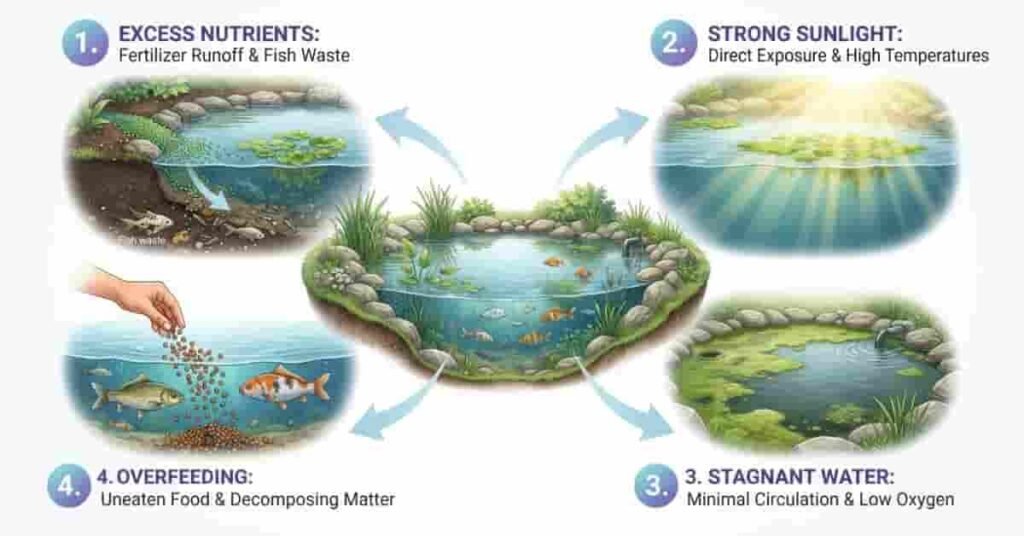
Pond algae grows when conditions provide enough nutrients, light, and water for rapid growth. Understanding these triggers makes pond algae prevention much easier.
Effective prevention starts with understanding why algae grows in the first place. Learn more about what causes algae in ponds, including sunlight, excess nutrients, fish waste, and poor circulation.
Excess Nutrients
Nutrients are one of the biggest factors behind algae growth. Fish waste, uneaten food, decaying leaves, and fertilizer runoff can add nutrients to pond water.
Too many nutrients give algae the resources it needs to multiply. Regular debris removal and careful feeding can help keep nutrient levels under control.
Too Much Sunlight
Algae needs light to grow through photosynthesis. A pond that receives strong sunlight for long periods may face faster algae growth.
Aquatic plants can provide natural competition for light and nutrients. Floating plants can also create partial shade across the water surface.
Stagnant Water
Poor circulation can create areas where nutrients collect and water quality declines. These stagnant zones can encourage algae to spread.
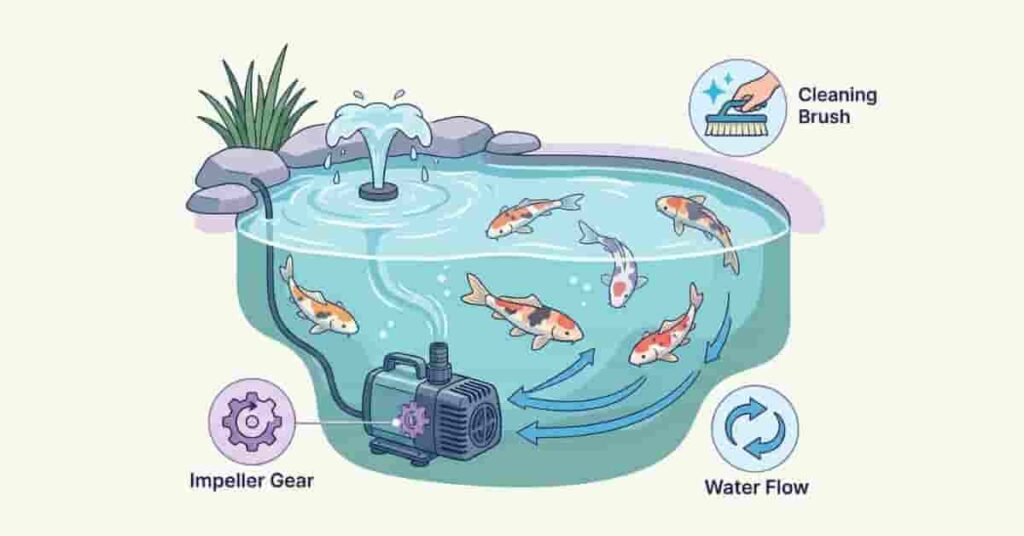
A properly sized pump, fountain, or waterfall can improve circulation throughout the pond. Good movement also supports oxygen exchange.
Overfeeding Fish
Uneaten fish food quickly becomes an additional nutrient source. Fish waste also adds nutrients that algae can use.
Feed fish only what they can consume promptly, and remove leftover food when necessary. This simple habit supports long-term algae control and cleaner pond water.
Best Ways to Prevent Pond Algae
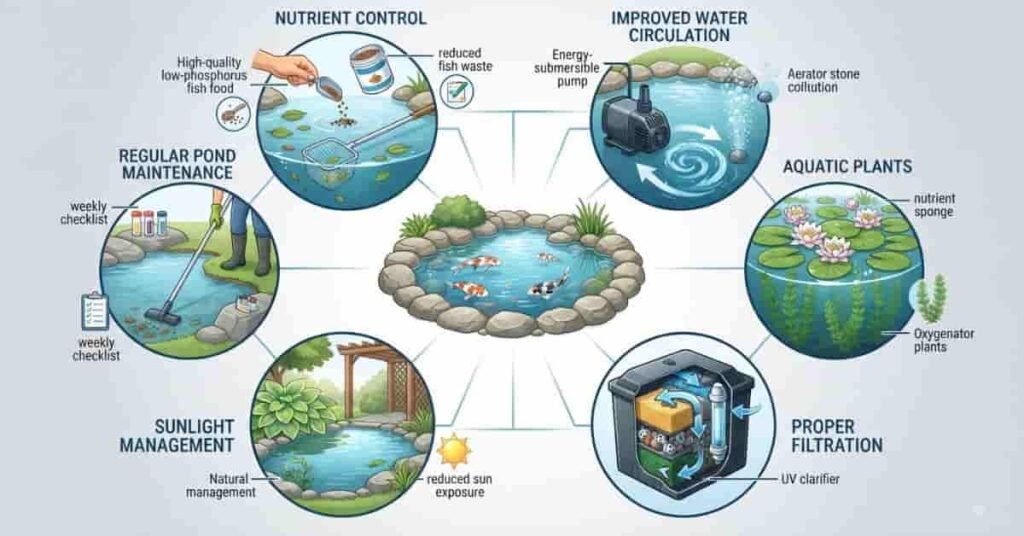
Preventing algae starts with keeping your pond ecosystem balanced. You don’t need to rely on repeated treatments when you control the conditions that encourage algae growth.
The most effective approach combines nutrient control, good circulation, aquatic plants, filtration, sunlight management, and regular maintenance. Each method supports the others and helps keep pond water clearer over time.
One common sign of an algae problem is water that suddenly becomes green or cloudy. If this is happening in your pond, learn why pond water turns green and what may be causing it.
1. Control Nutrients in Water
Excess nutrients can quickly fuel algae growth. Fish waste, uneaten food, decaying leaves, and fertilizer runoff can all add nutrients to pond water.
Start by feeding fish carefully and removing uneaten food. Clear leaves, dead plants, and other organic debris before they break down in the water.
Also, prevent lawn fertilizers from washing into your pond during rain. A buffer of vegetation around the pond can help reduce runoff.
Pro Tip: Check your pond after heavy rain. Runoff can carry soil, fertilizer, and organic material into the water.
2. Improve Water Circulation
Good water movement helps reduce stagnant areas where debris and nutrients can accumulate. It also supports oxygen exchange at the water surface.
A properly sized pump, fountain, or waterfall can keep water moving throughout the pond. Position outlets carefully so circulation reaches areas with little movement.
Avoid creating strong currents that stress fish or damage delicate aquatic plants. Your goal is steady, balanced circulation rather than maximum water movement.
3. Add Aquatic Plants for Natural Competition
Aquatic plants can help prevent algae by competing for available nutrients and sunlight. They also provide useful habitat for pond organisms.
Consider plants such as water lilies, floating plants, and oxygenating plants. Choose species that suit your pond size, climate, and fish population.
Plants should complement your filtration system rather than replace it. Avoid overcrowding the pond because excessive plant growth can create maintenance problems.
Pro Tip: Choose several plant types that cover different areas of the pond for a more balanced ecosystem.
4. Maintain a Proper Filtration System
Effective filtration helps remove debris and process waste before it contributes to algae growth. Most pond systems use mechanical and biological filtration together.
Mechanical filters capture particles such as leaves and suspended debris. Biological filters provide surfaces where beneficial microorganisms can process organic waste.
Follow a consistent cleaning schedule based on your pond’s conditions. Clean mechanical media when it becomes clogged, but avoid unnecessarily deep-cleaning biological media.
5. Limit Excessive Sunlight Exposure
Algae needs light for photosynthesis, so excessive sunlight can encourage faster growth. You don’t need to shade the entire pond to reduce this effect.
Use floating plants, water lilies, or carefully planned surrounding vegetation to provide partial shade. Deeper pond areas can also reduce the amount of light reaching lower water layers.
Avoid excessive shading that prevents beneficial aquatic plants from growing. Aim for a balanced environment rather than complete darkness.
6. Follow a Regular Pond Maintenance Routine
Consistent maintenance helps prevent small problems from becoming major algae blooms. A simple routine can keep nutrients, debris, and equipment under control.
During regular checks, remove leaves and visible debris from the water. Inspect pumps, filters, fountains, and other equipment for reduced performance.
Adjust your routine during seasons with heavier leaf fall or faster plant growth. Early maintenance often takes less effort than dealing with established algae later.
Pro Tip: Keep a simple maintenance schedule for debris removal, filter checks, equipment inspections, and plant care.
Even with good prevention, some ponds may still develop algae during warm weather or periods of poor water quality. If growth has already appeared, learn how to get rid of pond algae with practical treatment options.
Seasonal Prevention Tips
Pond algae prevention needs to change with the seasons. Weather, sunlight, plant growth, and pond activity can all affect algae growth.
Spring: Control Nutrient Buildup
Spring brings warmer temperatures and renewed plant growth. Winter debris can also remain in the pond and release nutrients as it breaks down.
Remove leaves, dead vegetation, and other organic debris early in the season. Check your filtration system and make sure pumps and filters work properly.
Summer: Watch for Higher Algae Risk
Summer often brings stronger sunlight and warmer water. These conditions can support faster algae growth when nutrients are available.
Keep fish feeding controlled and maintain steady water circulation. Monitor the pond regularly and remove new debris before it accumulates.
Winter: Maintain a Balanced Routine
Winter usually requires less active pond maintenance, but completely ignoring the pond can create problems later. Continue removing debris when conditions allow.
Avoid unnecessary cleaning that disrupts the pond ecosystem. Prepare filtration and circulation equipment according to your specific pond setup.
Pro Tip: Increase your pond checks during spring and summer when algae growth can become more noticeable.
Mistakes That Cause Algae Even After Treatment
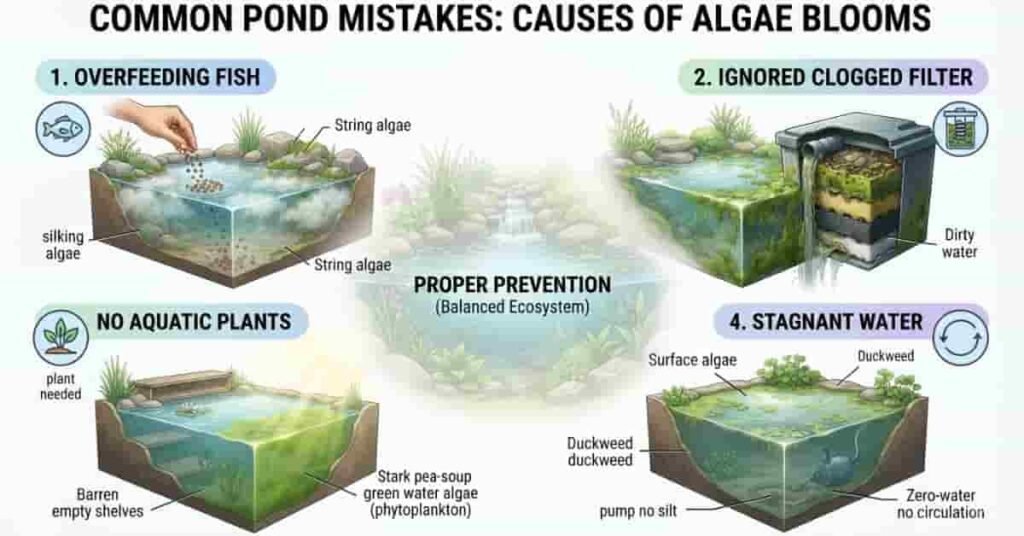
Treating existing algae doesn’t remove the conditions that caused it. Without prevention, algae can return after treatment.
Common mistakes include:
- Overfeeding fish: Uneaten food adds nutrients that can support algae growth.
- Ignoring filters: Clogged or poorly maintained filters reduce effective water treatment.
- Keeping no aquatic plants: Without suitable plants, the pond loses some natural nutrient competition.
- Allowing stagnant water: Poor circulation can create areas where nutrients accumulate.
Another common mistake involves treating algae without addressing the underlying water imbalance. Removing visible algae can provide temporary improvement, but prevention requires ongoing maintenance.
Focus on the causes, not just the symptoms. Better feeding habits, filtration, circulation, and debris control can support long-term algae control.
Expert Tip: After treating algae, review your pond routine and identify what allowed the bloom to develop.
For pond owners who prefer to avoid harsh treatments, natural control can be another useful approach. Explore how to get rid of pond algae naturally using methods such as better circulation, aquatic plants, and beneficial bacteria.
How to Keep Pond Water Clear Long-Term
Clear pond water depends on balance rather than one single algae-control method. Fish, plants, filtration, and circulation should work together as one system.
Fish add nutrients through waste, while plants can use some available nutrients. Filtration helps remove debris and process waste, while circulation keeps water moving throughout the pond.
The goal is to prevent nutrients from building up faster than your pond system can manage them. Avoid excessive fish stocking and feed fish carefully to limit unnecessary nutrient inputs.
Regular maintenance completes this system. Remove debris, inspect equipment, maintain filters, and monitor water conditions throughout the year.
A balanced ecosystem won’t guarantee completely algae-free water. However, consistent management can make algae growth easier to control and reduce recurring problems.
Pro Tip: Look at the whole pond system when algae returns. Check nutrients, fish load, plants, filtration, circulation, and sunlight together.
Prevention vs. Treatment
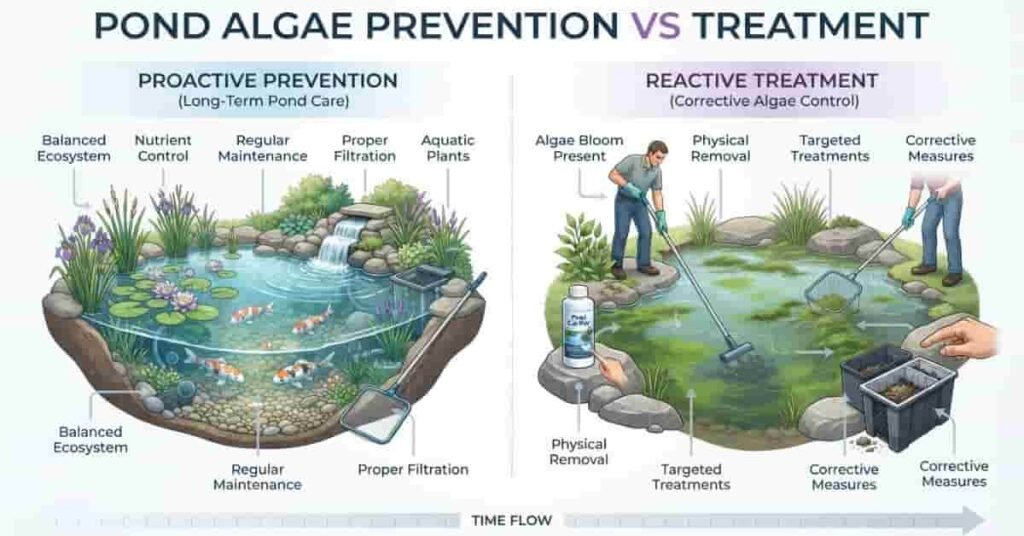
Preventing pond algae and treating an algae bloom serve different purposes. Prevention focuses on controlling the conditions that allow algae to grow.
Treatment reacts after algae has already become a visible problem. It can provide faster short-term improvement, but the underlying causes may remain.
Prevention: Lower Effort Over Time
Good prevention starts with simple habits. Control nutrients, maintain filtration, improve circulation, manage sunlight, and remove organic debris regularly.
These steps help create conditions that make excessive algae growth less likely. They also support healthier water for fish and aquatic plants.
Prevention doesn’t mean your pond will never contain algae. Small amounts can occur naturally in a balanced pond.
Treatment: A Reactive Approach
Treatment becomes useful when algae growth has already become excessive. Depending on the situation, treatment may involve physical removal or other control methods.
However, treatment alone may not solve recurring algae problems. If excess nutrients or poor circulation remain, algae can return.
Pro Tip: Use treatment to address an existing problem, then improve your maintenance routine to reduce future algae growth.
Conclusion
Preventing pond algae starts with managing the conditions that support a healthy pond ecosystem. Nutrient control, good circulation, aquatic plants, filtration, sunlight management, and regular maintenance all work together.
Learning how to prevent algae in pond water can make pond care simpler and more affordable. The goal isn’t to eliminate every trace of algae. Instead, aim for a balanced ecosystem that naturally limits excessive growth.
Even with good prevention, algae can sometimes become difficult to control. When that happens, understanding what kills pond algae can help you choose the right approach.
For beginners in the USA, consistent maintenance is often more practical than repeatedly treating algae blooms. Small habits can help keep pond water clearer and easier to manage.
If algae has already taken over your pond, explore our guides on how to get rid of pond algae and natural algae control methods. Share your pond maintenance tips or experience in the comments.
Frequently Asked Questions
You can’t always prevent every trace of algae, but you can reduce excessive growth. Control nutrients by avoiding overfeeding fish, removing leaves, and preventing fertilizer runoff. Keep water moving with proper circulation and maintain your filtration system. Aquatic plants can also compete with algae for nutrients and sunlight. Regular pond maintenance helps prevent conditions that encourage large algae blooms.
A balanced pond ecosystem helps keep water from turning green. Limit excess nutrients from fish waste, uneaten food, and decaying debris. Maintain good filtration and water circulation throughout the pond. Aquatic plants can provide competition for nutrients and sunlight. Partial shade can also reduce excessive light exposure. Regular maintenance helps keep these factors under control.
No, completely eliminating algae isn’t a realistic goal for most ponds. Small amounts of algae can naturally occur in aquatic ecosystems. The goal should be controlling excessive growth rather than removing every trace. Good nutrient management, circulation, filtration, aquatic plants, and regular maintenance can reduce the conditions that encourage algae blooms.
The best approach combines several prevention methods instead of relying on one solution. Control nutrients, avoid overfeeding fish, remove organic debris, and maintain effective filtration. Keep water circulating and use suitable aquatic plants. Managing excessive sunlight can also help. Consistent maintenance supports a balanced ecosystem and makes long-term algae control easier.
Algae can return when the conditions that caused the original bloom remain. Treatment may remove existing algae without addressing excess nutrients, poor circulation, or excessive sunlight. Check your fish feeding habits, filtration, water movement, and debris levels. Improving these factors can help reduce recurring algae growth and support longer-lasting results.
Yes, suitable aquatic plants can help reduce algae growth. Plants compete with algae for nutrients and sunlight while supporting a more balanced pond ecosystem. Water lilies, floating plants, and oxygenating plants can all contribute to pond management. Choose plants based on your pond size and conditions, and avoid overcrowding the pond.
A properly sized pond pump can help improve water circulation and reduce stagnant areas. Better circulation distributes oxygen and helps prevent nutrients from concentrating in poorly moving areas. A pump alone won’t prevent algae if excess nutrients remain in the pond. Combine circulation with filtration, careful feeding, debris removal, and other prevention methods.
Overfeeding can contribute to algae growth because uneaten food adds nutrients to the water. Fish waste also increases the nutrient load in the pond. Feed fish carefully and avoid giving them more food than they can consume. Removing leftover food can further reduce unnecessary nutrients that support excessive algae growth.
There isn’t one cleaning schedule that suits every pond. Check your pond regularly and remove leaves, dead plant material, and visible debris before they accumulate. Inspect filters and circulation equipment as part of your routine. Seasonal conditions may require more frequent attention, especially during periods of heavy debris or faster algae growth.
Sunlight supports algae growth because algae needs light for photosynthesis. Excessive sunlight can become a bigger problem when nutrients are also abundant. Use aquatic plants or surrounding vegetation to provide partial shade where appropriate. Avoid completely shading the pond because beneficial plants also need light to grow.
Algae itself isn’t automatically harmful to fish, and some algae naturally occurs in ponds. However, excessive algae growth can indicate an underlying water-quality imbalance. Large algae blooms can also create problems when conditions change or algae rapidly dies and decomposes. Maintaining circulation, filtration, nutrient control, and proper fish care helps support a healthier pond.
Treatment can help when excessive algae has already developed, while prevention addresses the conditions that encourage future growth. If algae keeps returning, focus on nutrients, circulation, filtration, sunlight, fish feeding, and debris. Using treatment alongside better maintenance can provide a more sustainable approach than repeatedly treating the same problem.

Michael Brooks and Sarah Lane are the co-founders of the Pond Pump Team, a trusted U.S.-based group helping homeowners and landscapers build better ponds and water features. Michael, an experienced pond engineer from Oregon, has worked for over 12 years on pump sizing, flow systems, and water circulation. Sarah, a pond designer from Colorado with nine years of experience, focuses on eco-friendly and easy-to-maintain pond and waterfall designs. Together, they’ve completed more than 180 pond projects and created tools like the Pond Pump Calculator and Pond Liner Calculator to make pond planning simple, accurate, and sustainable.
Need help with your pond setup? Contact the Pond Pump Team for expert advice and reliable solutions.